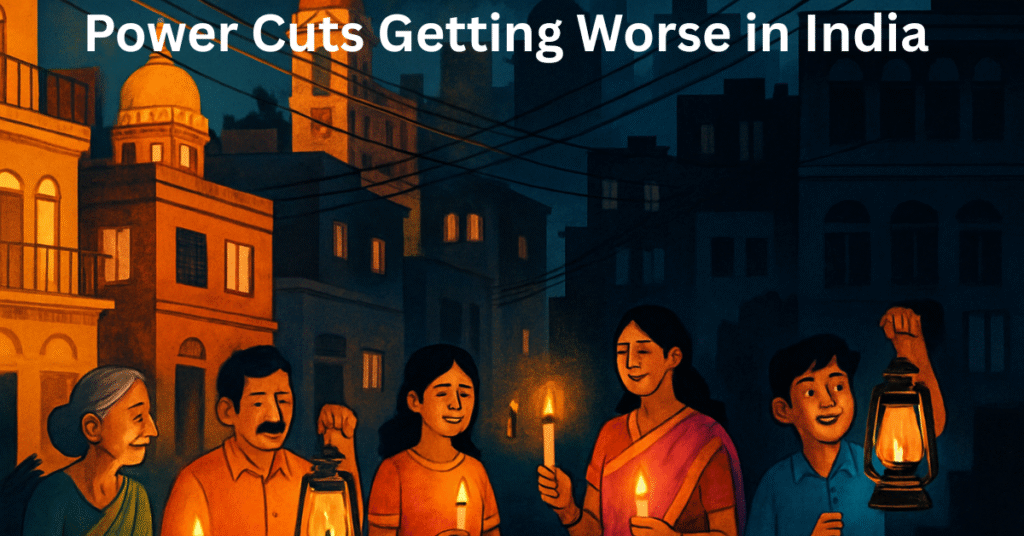
Power cuts are happening more often in India in 2025. This affects many people from families in big cities to small shops in villages. But why are these power outages happening so much, and what is causing this problem?
The number one reason for more frequent power cuts is that India’s electricity demand is surging faster than the country’s ability to supply it. In 2025, peak demand is expected to hit a record 273 gigawatts (GW), especially during the scorching summer months. This is mainly because of increased use of air conditioners, fans, and other cooling appliances as heatwaves get more prolonged and more intense. Urban migration and the trend toward digital lifestyles — with more people working from home or attending online classes — have also pushed demand sky-high.
Renewable Energy: A Double-Edged Sword
India has made huge strides in adding solar and wind power to its energy mix. While this is great for the environment, there’s a catch: most of these renewables don’t come with big batteries or storage systems. Solar energy generation, for example, peaks in the afternoon, but demand often peaks later in the day — just when the sun goes down and solar output drops. This causes evening shortages, especially in May and June when everyone’s trying to cool their homes.
Moreover, India decided a decade ago to slow down the expansion of coal-fired (thermal) power plants, which used to provide reliable backup during such times. Now that India depends more on renewable energy and is building fewer coal power plants, there is less backup power available to meet sudden rises in electricity use or when renewable energy drops.
Grid Stability and Storage Challenges
Switching to renewables is not as simple as flipping a switch. Weather-dependent energy like wind and solar is not always predictable. Without enough storage, the electricity grid struggles to balance sudden changes. Battery and pumped-storage systems — which can store excess power for use when needed — just haven’t caught up. India doesn’t have enough storage for extra electricity. By the end of 2024, we could save only a small amount in big water and battery systems. This isn’t enough to keep the lights on when people use a lot of electricity or when solar and wind power aren’t working well.
Outdated Infrastructure and Distribution Inefficiencies
Another big piece of the puzzle: India’s physical power infrastructure is old and often poorly maintained. Transmission lines, substations, and transformers are sometimes unable to cope with high loads or efficiently move power across distant states. On top of that, many state-run electricity distribution companies (discoms) remain in poor financial health, making it hard for them to invest in upgrades, fix leaks, or manage supply efficiently.
Coal Supply and Transmission Bottlenecks
Even where enough electricity could theoretically be generated, there are other obstacles. Thermal plants occasionally face coal shortages or delays in coal transport. At the same time, there are “transmission bottlenecks”—places where power cannot be moved efficiently between regions, leading to localized blackouts.
The Impact: More Than Just Inconvenience
A power cut is more than just a dark room. For families, it can mean no water (as pumps fail), spoiled food, security risks, and kids unable to study. For hospitals, it’s potentially much worse, risking critical equipment failure. In rural areas, the impact can feel like going backward in time — productivity plummets, and even simple daily tasks become tough.
What’s Being Done?
Both the central and state governments are now racing to fix these issues. Efforts include mandating new storage solutions, reviving older thermal power plants for backup, and rolling out advisory guidelines to make future renewable projects “storage-ready.” But building new storage, strengthening the grid, and reforming discom finances all take time, careful planning, and significant investment.
Conclusion
Rising power cuts in India during 2025 are the result of booming demand, a challenging transition to renewable energy, a lack of adequate storage options, aging grid infrastructure, and financial and logistical struggles in power distribution and supply. Solving the crisis means rethinking how the country produces, stores, and shares electricity — but until then, frequent outages may remain a fact of life, especially in the hottest months of the year.