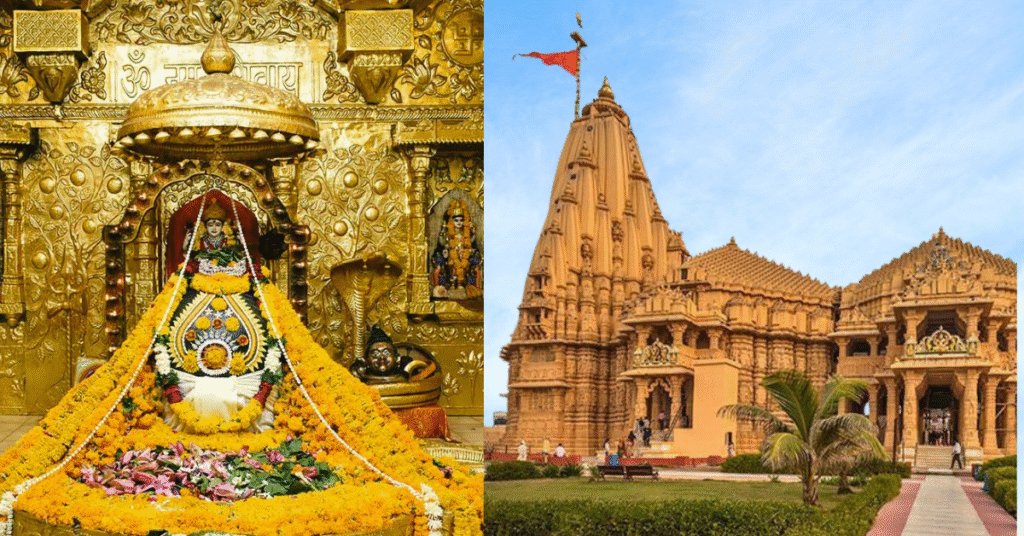
The Somnath Jyotirlinga temple is one of the most sacred and historically significant Hindu temples dedicated to Lord Shiva. It is regarded as the first among the twelve Jyotirlingas—shrines where Shiva is believed to have manifested as a pillar of light. The temple stands on the western coast of Gujarat, in a town called Prabhas Patan, near Veraval, at the confluence of three mythological rivers: Kapila, Hiran, and Sarasvati, which touch the Arabian Sea shore.
Ancient Origins and Mythological Significance
Legend holds that the temple’s origins date back to the Satya Yuga, the earliest age in Hindu cosmology, when it was constructed by the Moon God (Somraj) entirely from gold. In subsequent ages, it was said to have been rebuilt by the demon king Ravana using silver, by Lord Krishna using sandalwood, and finally by King Bhimdev using stone. These stories symbolize the temple’s divine and eternal nature.
The name “Somnath” means “Protector of the Moon God.” According to mythology, Lord Shiva helped the Moon God, Chandra, relieve a curse placed upon him by Daksha Prajapati. Impressed by his penance, Shiva appeared as a Jyotirlinga here and blessed him, which marks this spot as spiritually powerful and sacred.
Also read: – 12 Jyotirlingas of India Spiritual Gems of India
Historical Timeline: Destruction and Rebuilding
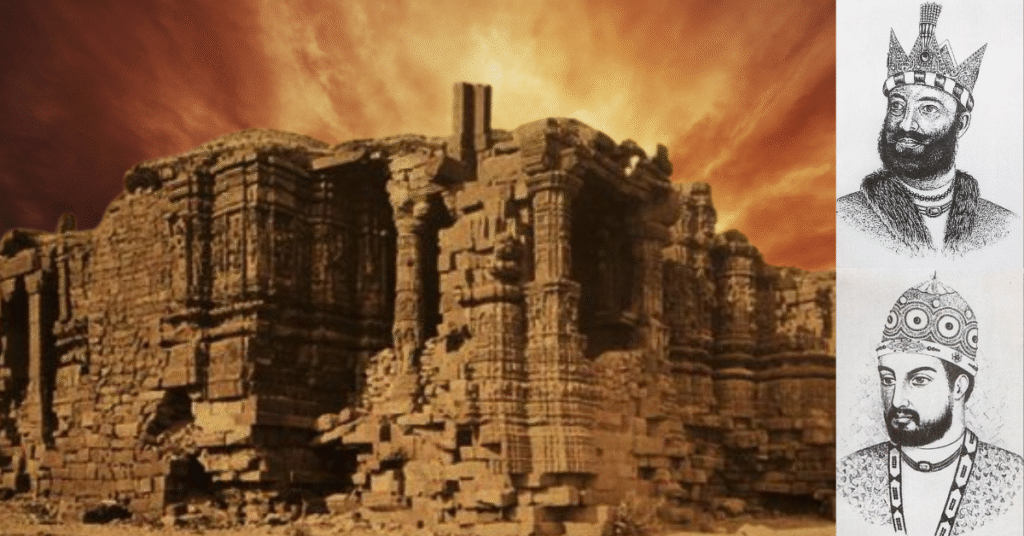
Historically, the Somnath temple is very ancient, with records hinting at its existence as far back as 2000 years ago. Throughout history, the temple has faced repeated invasions and destruction by various Muslim invaders, including Mahmud of Ghazni in the 11th century, Ala-ud-din Khilji’s commander Ulugh Khan in the 13th century, and others over the centuries. Each time it was plundered and desecrated, the temple was rebuilt with great devotion by local rulers and devotees, including King Bhimdev, Kumarapala of the Chalukya-Solanki dynasty, and Mahipala I of the Chudasama dynasty.
The temple has been reconstructed approximately 17 times, symbolizing the region’s resilience and deep religious faith. The current magnificent structure was rebuilt in the traditional Māru-Gurjara (Solanki) architectural style after India gained independence. The reconstruction was famously initiated and overseen by India’s first Deputy Prime Minister, Sardar Vallabhbhai Patel, and was completed in 1951.
Architecture and Present-Day Temple
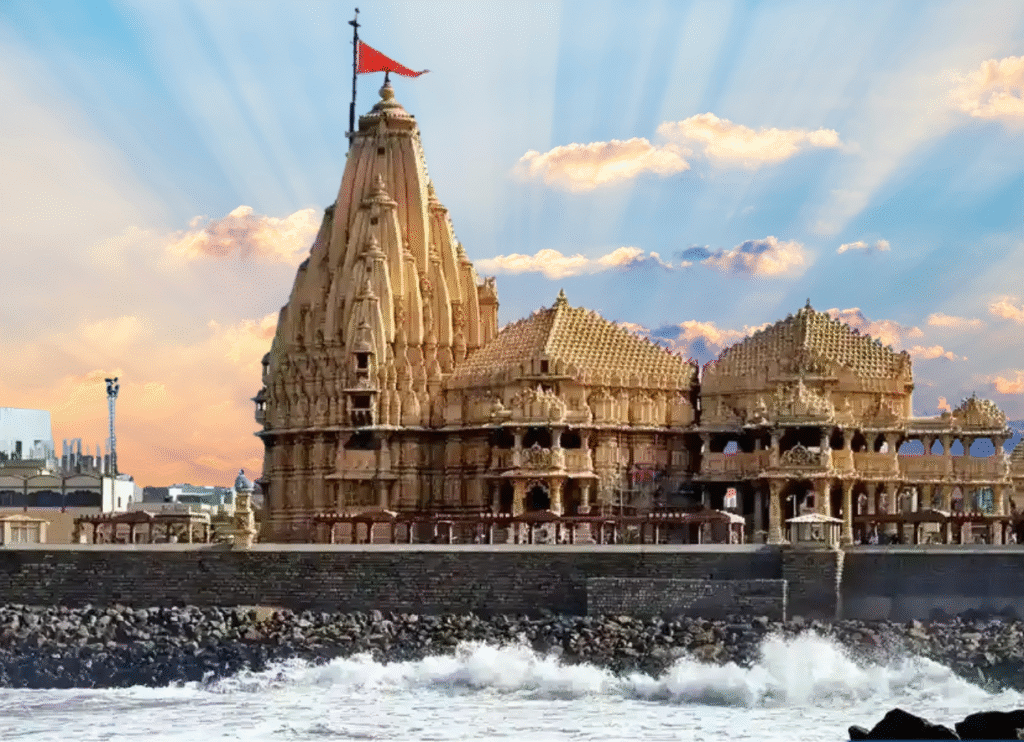
The Somnath temple we see today is truly beautiful and full of detailed carvings that show the skill of ancient Indian builders. It is mostly painted a soft, creamy white color and decorated with many fine sculptures. Inside the temple’s main chamber, there is a big black Shiva lingam that people come to worship. Around the temple, you will find walls covered with carefully carved designs, a grand entrance guarded by a large statue of Lord Shiva, and a statue of Nandi, the bull who is Shiva’s loyal companion.
What makes this temple even more special is its location—right on the coast of the Arabian Sea. The calm waves gently touch the shore near the temple, creating a peaceful and spiritual atmosphere that adds to the feeling of being close to the divine.
Visitors today can enjoy a peaceful darshan (viewing of the deity), witness daily rituals including the anointing of the Shiva lingam with milk, and attend a popular sound-and-light show narrating the temple’s history every evening.
Spiritual and Cultural Importance
Somnath Jyotirlinga holds a very special place in Hinduism. It is believed to be the spot where Lord Shiva first appeared as a shining pillar of divine light. This powerful appearance makes Somnath a place where people feel they can awaken spiritually and receive blessings. Every year, thousands of devotees from across India and the world visit the temple seeking the divine grace of Lord Shiva and to experience the sacred energy that fills the temple.
The temple’s story is one of faith and strength. Despite being destroyed many times over the centuries by invaders, it was lovingly rebuilt each time, showing the deep devotion of the people. This cycle of destruction and rebuilding has made Somnath a symbol of endurance, faith, and spiritual beauty—an inspiring reminder that true belief and spirit can never be extinguished.
Today, Somnath Jyotirlinga stands not only as a holy place but as a beacon of hope, faith, and spiritual light for all who come to worship and find peace.
Conclusion
From its divine beginnings to the present grand building, Somnath Jyotirlinga temple remains a shining symbol of deep faith, spiritual devotion, and resilience through the ages. It holds a special place in the hearts of devotees who visit it to experience its sacredness and history. It remains an important cultural and religious landmark, reminding all who visit of the eternal light of Lord Shiva and the enduring spirit of faith.