

Kedarnath is a name formed from “Kedara” (meaning place or field) and “Nath” (meaning
Lord Shiva), signifying the sacred abode of Lord Shiva. Suppose there is one wish that unites
almost every Hindu’s heart. In that case, it is to visit Kedarnath—nestled deep in the rich
Garhwal Himalayan Range at an altitude of 11,755 feet above sea level. This ancient temple
stands close to the Chorabari Glacier, the birthplace of the Mandakini River.
Kedarnath holds a place of great reverence. It is one of the twelve Jyotirlingas, one of the five
pilgrimage sites in the Panch Kedar circuit. It counts among the four holy shrines of the
Chota Char Dham Yatra in Uttarakhand. Kedarnath is no ordinary temple. According to
Hindu mythology, it is the principal temple where Lord Shiva is worshipped in his purest
form. For centuries, millions of devotees have braved a moderate to difficult trek of 18
kilometers to reach this divine destination.
History says: Over the years of Kedarnath Temple’s presence, it has seen it all—seasons,
centuries, and disasters have passed by, but what remains is Lord Shiva’s timeless and
precious bliss at Kedarnath.
Architecture
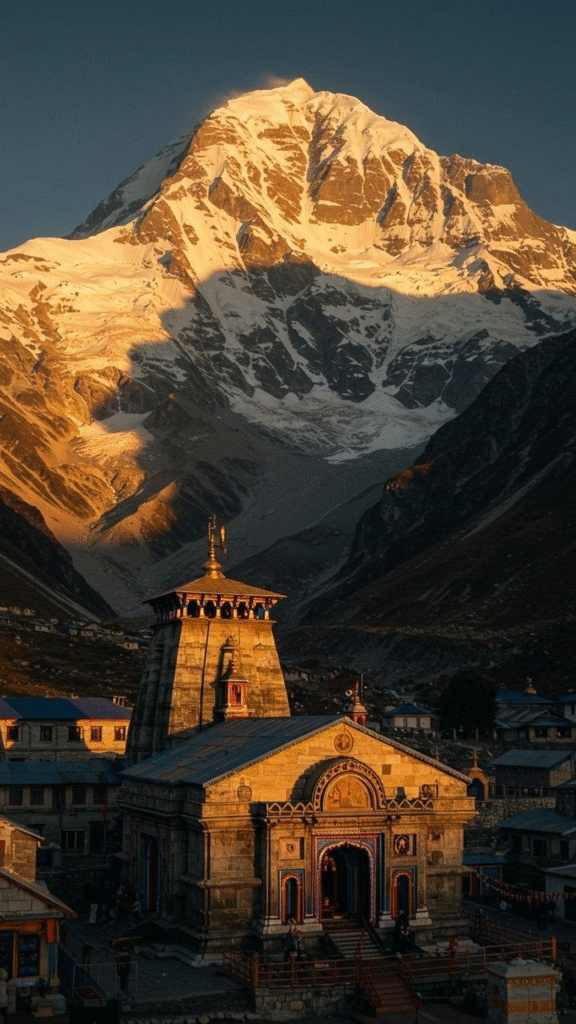
Everything said about the beauty of Kedarnath’s architecture feels like an understatement. Its
architecture is divided into two parts: Garbhagriha (sanctum), which consists of Shiva
Lingam, and a Mandap (Hall) where pilgrims gather for prayers. Inside the temple, sculptures
carved on the walls depict mythological figures from Hindu Dharma, making the temple itself
a living testament to devotion and artistry.
History and Legends
There are many stories and tales (kathas) linked to the origin of Kedarnath. The most famous
is tied to the Mahabharata. After the great war, the Pandavas, filled with guilt for fighting
against their kin, sought penance from Lord Shiva. Shiva, however, wished to avoid them and
disguised himself as a bull. When the Pandavas recognized the bull as Shiva, he vanished into
the ground, leaving his hump behind at the spot now known as Kedarnath. The Pandavas
worshipped the hump, built a temple, and the other body parts of Shiva are said to have
appeared at the other Panch Kedar temples, making this a pilgrimage trail unlike any other.
It is the only Shiva temple where the Lingam is worshipped in the form of a natural rock that
resembles a bull’s hump.
While the spiritual connection to the Pandavas gives Kedarnath its mythological roots, Adi
Shankaracharya’s vision in the 8th century CE gave the temple its present form. They
elevated its status in India’s spiritual geography. Adi Shankaracharya, a philosopher and
religious reformer, revived many Hindu traditions and established the Char Dham pilgrimage
circuit. He is believed to have taken samadhi near Kedarnath at the age of just 32, and his
tomb stands just behind the temple, a site visited by countless pilgrims.
The Story of Faith and Divine Protection
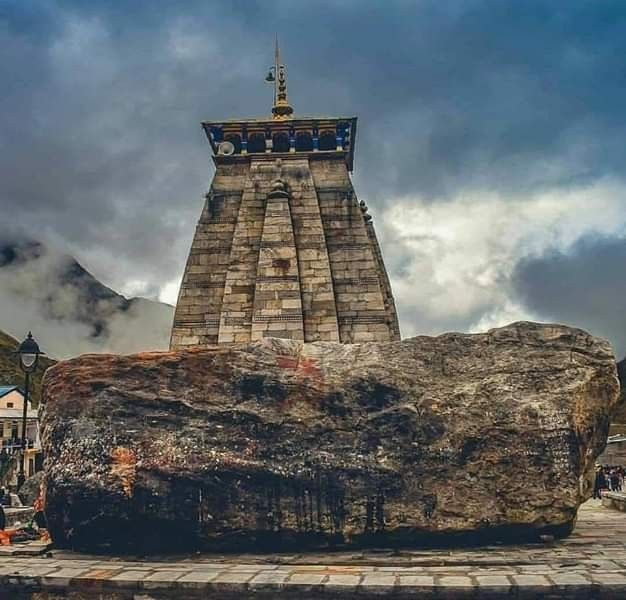
During the 2013 Uttarakhand Cloud Burst 7 Flood Disaster, a massive calamity that wiped
out much of the town around the temple, the Kedarnath Temple remained miraculously
intact. A giant Rock managed to stand tall behind the temple, diverted all the flow of water,
saving all the people who took shelter inside the Temple, now known as the “Bhim Shila,” is
still there behind the temple & is now being worshipped by many as a divine protector.
For some, it is a coincidence, but for most of us, we believe in Lord Shiva’s boon for those
who were inside
Pilgrimage, Nature, and Traditions
Kedarnath is not just any place to visit. It is a journey of faith, courage, and surrender. The
walk to the temple is often covered by mist and lined with beautiful rhododendron flowers. It
is both a challenge and a blessing. Pilgrims enjoy the amazing views and fresh mountain air.
The temple stays open from late April or early May until November, because heavy snow
makes it impossible to visit during winter. When the temple closes, the holy Shiva idol is
taken down to Ukhimath, where it is worshipped until the temple reopens. During winter, the
Shiva idol is carried to Ukhimath for worship.
The priests of Kedarnath belong to the Veerashaiva community of Karnataka and are called
“Rawal.” Major festivals include Maha Shivaratri and special poojas before the temple closes
for winter. Visiting Kedarnath is an act of devotion—one believed to cleanse the soul and
connect the heart to something eternal.
Enriching Facts and Local Lore
Mention in Ancient Texts: The Skanda Purana and other scriptures describe
Kedarnath as the place where the Ganga descended and was tamed in Shiva’s hair.
Temple Construction: Despite earthquakes and harsh weather, the temple has
survived for centuries, a testament both to ancient engineering and the faith of its
keepers.
Festivals and Rituals: Special homas, aartis, and abhishekams fill the summer with
spiritual energy. Even those unable to make the trek often hope to see live telecasts of
rituals.
Environmental Significance: The surrounding region is part of the Kedarnath
Wildlife Sanctuary, rich with alpine meadows and rare Himalayan wildlife.
Conclusion
Kedarnath is a timeless symbol of faith, courage, and the deep love people have for Lord
Shiva. Whether someone goes there to seek forgiveness, blessings, or to witness the story of
survival and devotion, every step toward Kedarnath feels like moving closer to the heart of
the Himalayas and the spirit of ancient Indian teachings known as Sanatan Dharma.






Your journey from NAS To Atlantis is seamless with our Atlantis Airport Shuttle and Taxi From Nassau Airport To Atlantis. We offer Atlantis Transportation From Airport, Chauffeur Service Atlantis, and the Best Transportation From Nassau Airport To Atlantis every time.