The nationwide Australian protest against migration—branded “March for Australia”—erupted on 31 August 2025, drawing thousands across Sydney, Melbourne, Brisbane, Perth, Canberra, and regional centers as organizers blamed “mass migration” for housing stress, congested services, and social fragmentation, while leaders condemned extremist elements and racist rhetoric at some rallies. Counter-protests, heavy policing, and sharp debate over the balance between population growth, multiculturalism, and infrastructure capacity in a cost‑of‑living crunch marked the events.
Why Australian protest started
Organizers said the Australian protest was a reaction to “mass migration.” They argued it is making life harder — pushing up rents and house prices, crowding hospitals, clogging roads, squeezing wages, and putting pressure on the environment. They used this broad list of worries to bring many people under one banner. Analysts and officials said the protests also grew because far‑right groups amplified them online, misinformation spread quickly, and global nationalist trends played a role. At the same time, Australia is strongly multicultural, with a large share of residents born overseas or with a parent born overseas.
Where Australian protest spread
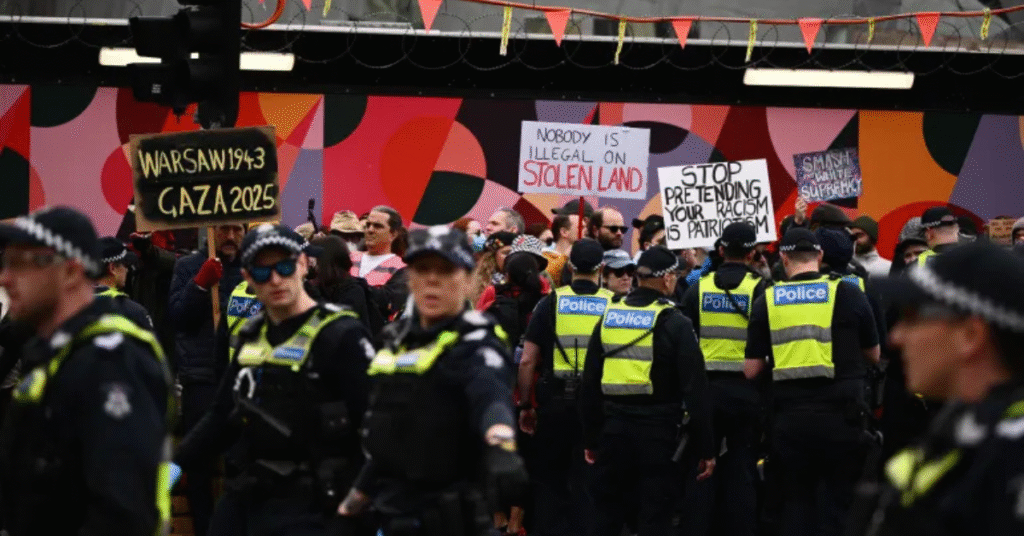
Rallies took place in major capitals and regional hubs, with the largest turnouts in Sydney and Melbourne under significant police deployment and visible counter‑mobilization by community and refugee advocacy groups. ABC estimates cited by the media put Sydney’s gathering between roughly 5,000 and 8,000. At the same time, Melbourne saw tense confrontations near Parliament, with police interventions and several detentions reported later in the day.
Also Read: Why Fitness in Your 30s Matters and Simple Habits to Live a Healthier Life – lostnews
How Australian protest mobilized
The March for Australia coalesced through organizer sites, social channels, and amplification by sympathetic politicians and far‑right influencers, turning service and affordability grievances into a coordinated national action. Messaging emphasized “doing what mainstream politicians lack the courage to do”—end mass migration—while listing cultural identity, wages, traffic, housing, water, environmental degradation, infrastructure, healthcare, and crime to unify disparate concerns under a single anti‑migration banner.
Slogans that defined it
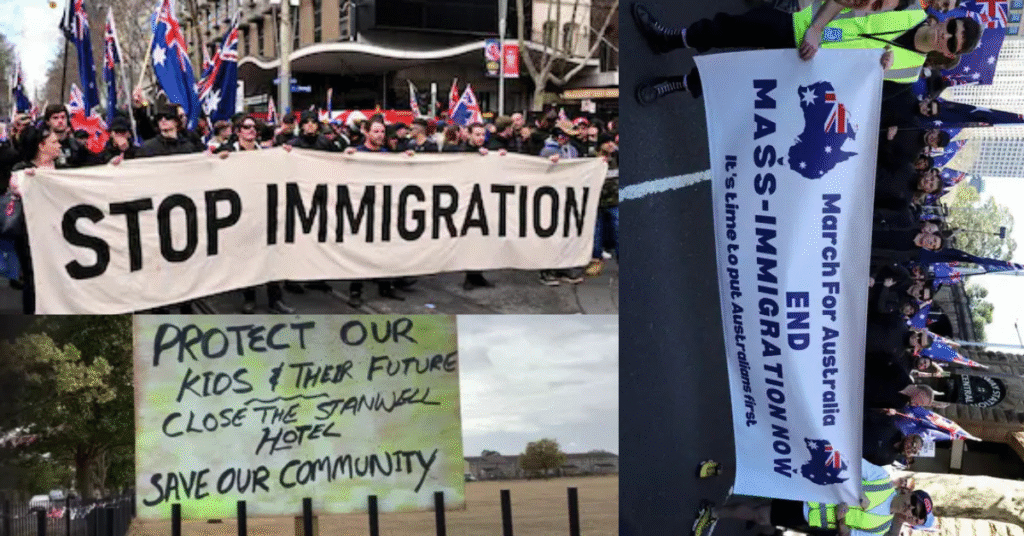
News outlets reported chants like “stop the invasion” and “send them back,” which quickly summed up the anti‑immigration message of the rallies and were repeated widely in coverage at home and abroad. Officials criticized the use of extremist phrases and salutes at some events, including “Hail White Australia,” saying this goes against modern multicultural values and may break new laws that ban Nazi symbols and gestures.
Political and diplomatic response
Federal ministers called the Australian protest divisive and said some groups with neo‑Nazi links were involved. They stressed that debate on migration should be respectful, fact‑based, and not used to threaten or intimidate migrant communities.
India also raised concerns after reports that some rhetoric singled out Indian migrants. Indian missions stated that they were in touch with Australian authorities and local communities. They reiterated their support for multicultural values and the contributions of the Indian diaspora.
Related Counter‑protests and policing
Community and refugee groups held counter‑rallies to challenge the marches. They argued that migrants strengthen Australia and that problems such as high housing costs and strained services stem mainly from planning and supply issues, rather than immigration alone.
Police sent large numbers of officers to keep the groups apart. They reported several arrests in some places, but said most crowds were managed safely, despite tense moments in central Melbourne.
Public sentiment and context
Before the marches, polls and commentary showed that people were becoming uneasy about population growth during a time of high living costs and stretched services, such as transport and healthcare. Organizers leveraged those concerns to boost turnout and garner media attention.
Experts warned that some claims about migration numbers and impacts were misleading. They said this can drown out practical fixes—like building more homes, improving planning, and expanding services—that relieve pressure without blaming migrant communities.
What’s next
Analysts think online support from global far‑right groups will keep boosting these rallies, so similar protests may happen again unless governments explain migration policy clearly and show real progress on housing and infrastructure. Leaders say they will strictly enforce laws against extremist symbols and hate speech, while pushing for a calm, fact‑based debate that puts the national interest and social harmony in a multicultural society first.