
Introduction: A Temple Where Faith Meets Silence
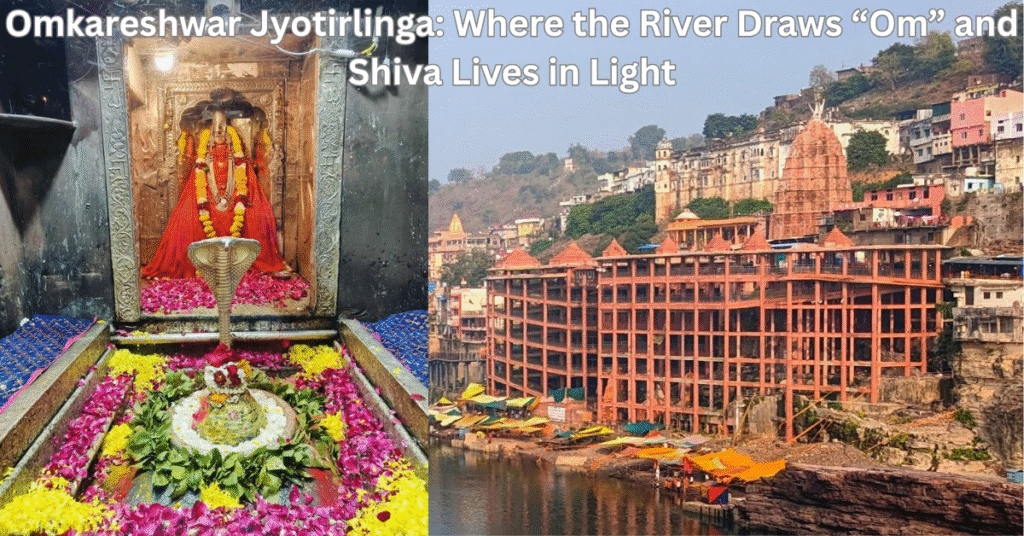
On a quiet island in the middle of the Narmada River, there stands a sacred temple where faith feels close and time seems to slow down. This is Omkareshwar—one of the twelve Jyotirlingas of Lord Shiva. The island is shaped like the symbol “Om,” and that alone sets the tone for what this place means: a meeting point of sound, spirit, and the flow of life. People come here not just to see a temple, but to feel the presence of Shiva as Omkar. This primal vibration began the universe.
Where Omkareshwar Is Located
Omkareshwar sits in the Khandwa district of Madhya Pradesh. The temple stands on Mandhata (or Shivapuri) island, with the Narmada flowing on both sides. Two bridges connect the island to the riverbanks. Many pilgrims prefer to do a peaceful parikrama (circumambulation) of the island, following the river, the rocks, and the call of “Om Namah Shivaya” rising from the ghats.
Why Omkareshwar Is Sacred
The name Omkareshwar means “Lord of Omkara.” The Narmada here curves in a way that resembles the sacred symbol “Om.” For devotees, it’s not just a geographical coincidence; it’s a sign. And at the heart of it all is the Jyotirlinga—the pillar of light, the formless Shiva, made visible in a form that people can worship with love and trust.
Twin Shrines: Omkareshwar and Mamleshwar
Omkareshwar is special because devotion here is shared between two closely linked temples—Omkareshwar on the island and Mamleshwar (also known as Amareshwar) on the mainland. Many traditions encourage visiting both; together, they complete the experience. The belief is that Shiva blessed this place in two forms: the light of Om in Omkareshwar and the earthly presence in Mamleshwar.
Also Read: The Timeless Story of Mahakaleshwar Jyotirlinga, Ujjain – lostnews
Legends and Stories of Omkareshwar
- Vindhya Mountain’s Penance: One legend says the Vindhya Mountain performed deep penance to please Lord Shiva, who appeared as Omkareshwar and agreed to reside here. The mountain promised not to trouble travelers—a gentle reminder that devotion must always make way for compassion.
- King Mandhata’s Tapas: Another story tells of King Mandhata of the Ikshvaku lineage, who meditated here for years. Pleased with his tapas, Shiva revealed himself as a Jyotirlinga. The island is also called Mandhata after him.
- Gods and Demons: When the balance of good tilted, the gods prayed to Shiva. He answered as Omkareshwar—the power that restores harmony.
From Past to Present: A Living Timeline
Omkareshwar has the soul of a timeless pilgrimage and the memory of many eras. Over the centuries, rulers, saints, and common people helped preserve it. The Paramaras, local chiefs, later Maratha influence—especially under Ahilyabai Holkar—added care, structure, and dignity to the site. But what truly built Omkareshwar is the steady river of devotion that never dried up.
What the Temple Looks Like
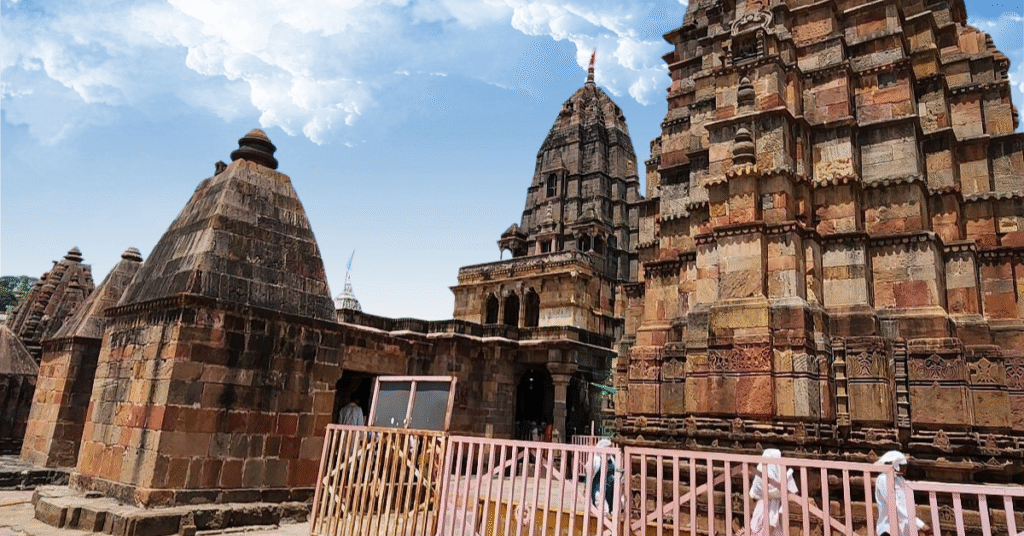
The temple structure has multiple levels, with a large sabha mandap supported by strong stone pillars. Inside, calm rules the air. The sound of bells, a conch, and soft chants carries through the hall. The Jyotirlinga is simple, undecorated—like a quiet flame. The temple spires rise over the island’s modest homes, ghats, and markets, reminding everyone that even everyday life can be sacred.
Daily Worship and Special Aartis
From morning abhishekam with water, milk, and bilva leaves to evening aarti by oil lamps, the rhythm of Omkareshwar is devotional and unhurried. Many devotees love the Shayan Aarti at night—a tender farewell to the deity before the doors close. On Mondays, Shivratri days, and in the holy month of Shravan, the glow of devotion becomes even brighter.
What Pilgrims Do Here
- Darshan at Omkareshwar and Mamleshwar
- Island Parikrama along the river
- A peaceful sit by the ghats, just listening to the Narmada
- Simple offerings: a coconut, some flowers, a diya, and a quiet prayer
- Reading, chanting, or meditating on “Om Namah Shivaya”
The Narmada Connection: A River That Frees
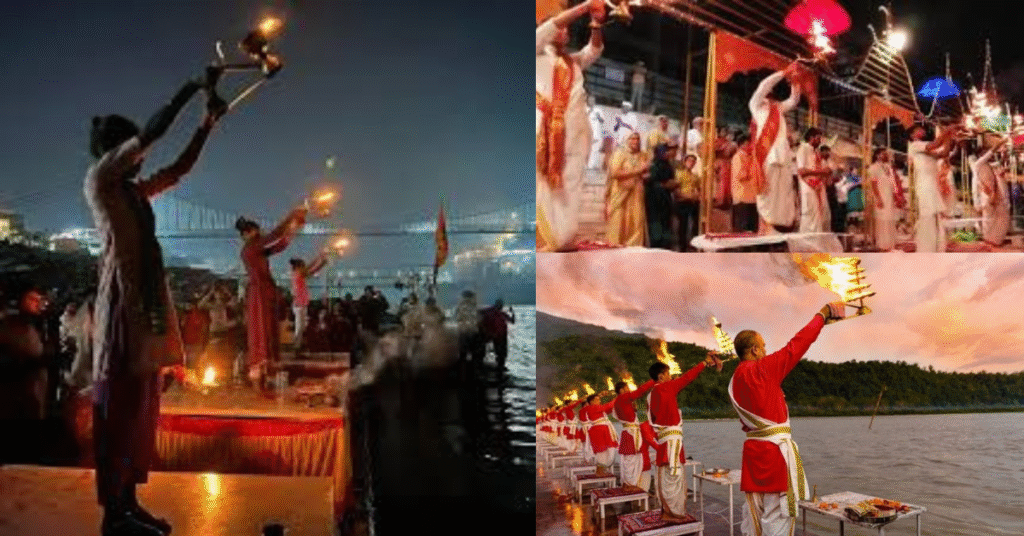
Many call the Narmada a moving pilgrimage—Reva, the river that frees. Omkareshwar sits like a jewel in her flow. People come to take a holy dip, light a lamp, or float flowers at dusk. The meeting of river and rock, sound and silence, is what makes Omkareshwar feel like a living mantra.
Travel Notes for Today’s Pilgrim
- Best time to visit: October to March for pleasant weather; Shravan and Mahashivratri for festival devotion.
- What to carry: Simple clothing, a light shawl, water, and respect for the temple’s customs.
- How to visit both shrines: Plan darshan at Omkareshwar first on the island, then cross to Mamleshwar—completing the experience as many traditions advise.
- Don’t rush: Sit by the river. Let the place speak to the heart.
Also Read: Kedarnath: A Path to Find Lord Shiva – lostnews
Why Omkareshwar Still Matters
In a world full of noise, Omkareshwar offers a single sound: Om. It reminds people that divinity is not far; it moves through breath, through rivers, through the will to be still. From ancient legends to modern visits, this Jyotirlinga remains a place where questions soften and prayers become simple.
A Quiet Ending: The Feeling That Stays
Omkareshwar is not only a temple—it is a feeling. It is the hush in the mind when a lamp is lit. It is the soft bend of a river that shapes itself into a sacred syllable. It is the presence of Shiva as light, as sound, as peace. People come here for answers, courage, gratitude, or just a moment of rest—and many leave with something they cannot quite explain, but will never forget.






2 thoughts on “Omkareshwar Jyotirlinga: Where the River Draws “Om” and Shiva Lives in Light”