
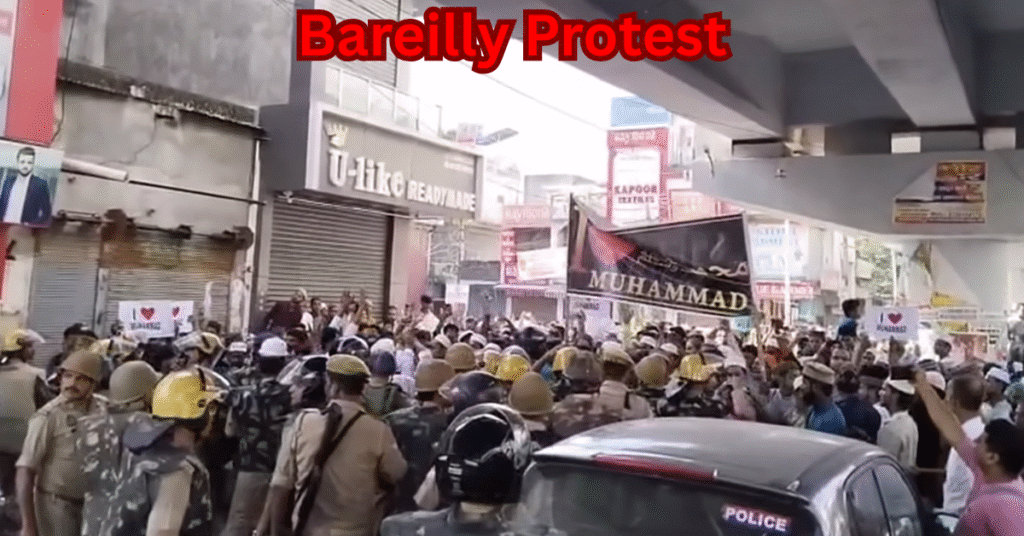
The Bareilly protest began as a post‑prayer demonstration on Friday but quickly escalated into stone‑pelting and a police lathi‑charge after authorities stopped crowds carrying ‘I Love Muhammad’ placards, triggering clashes across multiple localities and a heavy security response with arrests and injuries among police personnel. The unrest was linked to a wider row over ‘I Love Muhammad’ displays that started in Kanpur earlier in September and spread to several cities in Uttar Pradesh and beyond.
Background: The Kanpur Trigger and the Spread to the Bareilly Protest
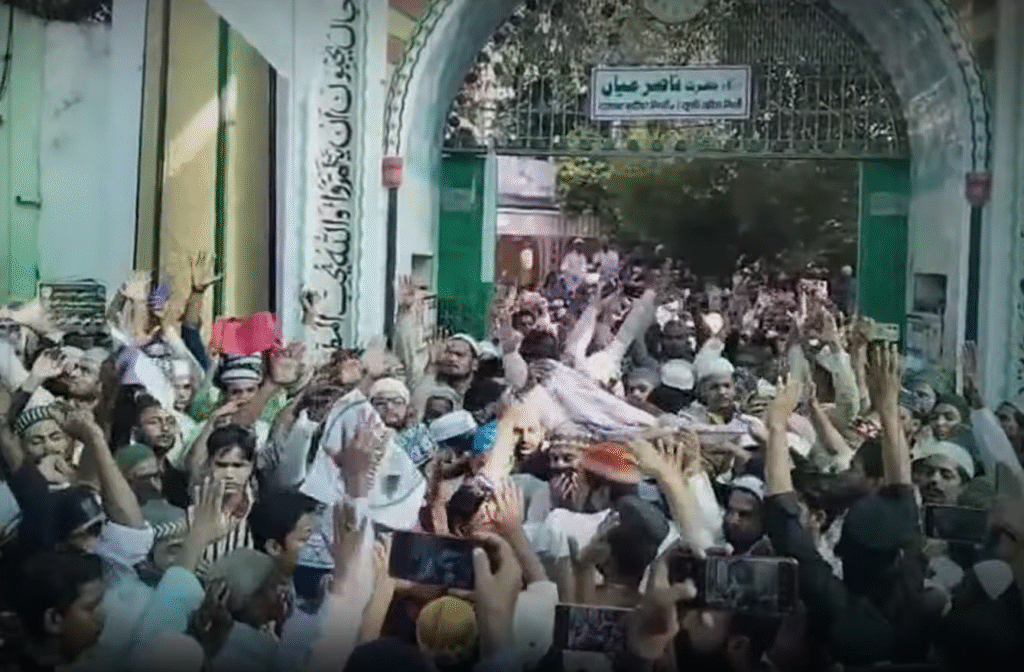
The immediate backdrop was an FIR in Kanpur linked to tensions during Barawafat decorations, amid which the “I Love Muhammad” message became a rallying symbol that then appeared in other cities, including Bareilly and Mau. In Bareilly, Ittehad‑e‑Millat Council (IMC) chief Maulana Tauqeer Raza Khan initially called for supporters to assemble at Islamia Inter College after Friday prayers to submit a memorandum on the issue, and later issued a rollback appeal citing lack of police permission due to overlapping festivals, but crowds still mobilized after prayers.
Build-Up Before Friday: Warnings and Preparations for the Bareilly Protest
Police said they had anticipated gatherings and deployed heavily across sensitive zones, coordinating with religious leaders and conducting foot patrols and flag marches to maintain calm throughout the prayer window itself. District and range‑level officers publicly stated that prayers had concluded peacefully in many places before smaller groups formed processions with placards and tried to move towards Islamia Ground and other sites, setting the stage for confrontation when stopped.
Also Read: – Nepal Protests 2025: Why Gen Z Took to the Streets Against Corruption and Censorship – lostnews
Flashpoint: When the Bareilly Protest Processions Turned into Clashes
The flashpoint came when processions were halted in the Kotwali and Baradari areas soon after prayers, with arguments giving way to stone‑pelting from within the crowd and rooftops, damaged vehicles, and provocative sloganeering that turned a tense standoff into running clashes across several police station limits. Police responded with lathicharge and tear‑gas shells to disperse the gathering as streets quickly emptied of traders and pedestrians, and shutters came down in local markets amid panic.
Violence During the Bareilly Protest Spreads Across Neighborhoods
Violence spread beyond the initial choke points to stretches around the mosque by Islamia Ground and towards the Dargah‑e‑Ala Hazrat, as groups attempted to march to Islamia Inter College but were blocked, leading to vandalism, toppled barricades, and debris‑strewn roads. Authorities reported clashes across as many as eight to nine locations, including Sadar Kotwali, Premnagar, and Baradari, prompting reinforcements from multiple adjoining districts to stabilize the situation.
Police Response and Ground Orders in the Bareilly Protest
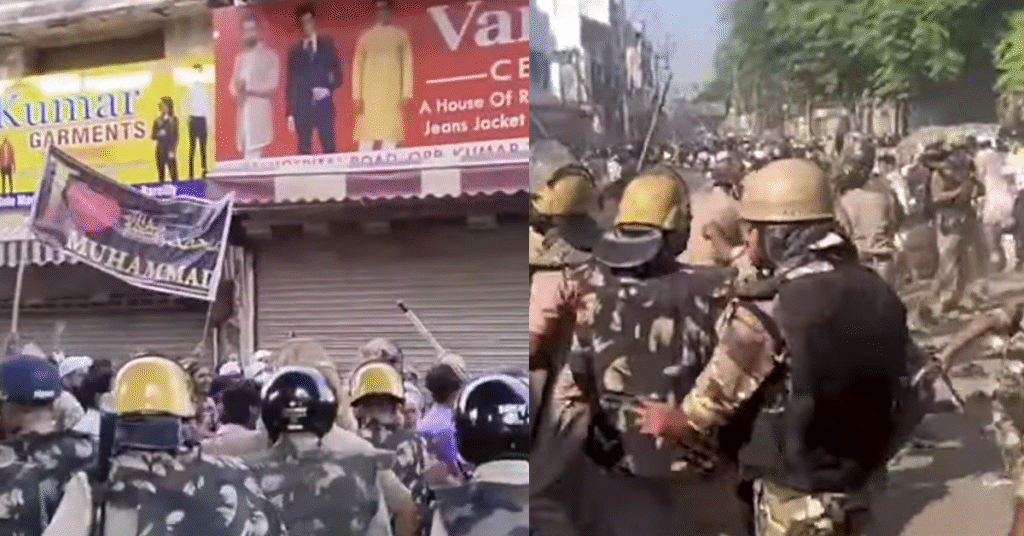
Senior officers stated that video documentation was undertaken to gather evidence as reinforcements arrived and area domination exercises commenced, including repeated flag marches to signal control and deter further mobilization. The district administration announced prohibitory measures, with local reports noting restrictions on gatherings and that protests without prior permission would be stopped, alongside deployments from RAF and RRF units to restore order.
Also Read: – Australian Protest 2025: Why the ‘March for Australia’ Shook the Nation – lostnews
Bareilly Protest: Arrests, Injuries, and Reports of Firing
Officials provided preliminary figures indicating detentions and arrests ranging from over a dozen to several dozen as separate agencies tallied cases and verified the roles of individuals picked up from trouble spots. Police accounts noted that over 10 personnel sustained injuries in stone‑pelting, with some reports placing the injured officers above 20. At the same time, officers also said cartridges and vehicles were damaged, and some protesters fired shots in parts of the city.
Role of leadership and competing messages
While Maulana Tauqeer Raza Khan’s initial call and later rollback set the day’s expectations, his name remained central as crowds gathered near his residence and key mosques before police took dispersal actions on site. Political and community leaders reacted through the evening, with the Chief Minister condemning attempts to disrupt order and warning of deterrent consequences. In contrast, Barelvi leaders appealed publicly against taking the law into one’s own hands and urged restraint.
Media, footage, and public imagery
Clips circulating on news platforms showed baton charges, crowds running, and abandoned footwear and posters across lanes, aligning with the police narrative of a quickly escalating situation from a limited post‑prayer window into citywide skirmishes. Television and digital outlets highlighted how a sit‑in plan that was called off still gave way to spontaneous assembly, with some reports noting gunshots in the air and a stampede‑like rush as security forces pushed crowds back.
Wider context beyond Bareilly
The Bareilly unrest forms part of a broader pattern that traces back to early September tensions in Kanpur and subsequent solidarity demonstrations, with spillovers reported in other cities, such as Mau, on the same day, and a series of processions and stoppages across Uttar Pradesh this month. National business media framed the Bareilly episode as the latest in a chain of protests across multiple states tied to the same trigger, underscoring the campaign’s rapid spread and law‑and‑order sensitivity ahead of festival calendars and public events.
Official position and present status
By evening, police said things were under control. Teams continued to conduct flag marches, questioned those detained, and filed FIRs against the individuals they believed were responsible for the trouble. Residents in sensitive areas were asked to stay indoors for the night. The administration signaled a zero-tolerance posture on unauthorized protests, with expanded deployments maintained throughout the night to preempt any fresh mobilization or retaliation in affected neighborhoods.
Key timeline at a glance
- Early September:An FIR in Kanpur during Barawafat sparked the ‘I Love Muhammad’ slogan, which then appeared in other cities like Bareilly and Mau, turning the state into a powder keg for marches and police pushback.
- Pre‑Friday: IMC chief first calls for a post‑prayer assembly at Islamia Grounds to submit a memorandum, then withdraws the public call citing lack of permission during festival overlap, even as police scale up deployment across Bareilly.
- Friday post‑prayers: Processions form with placards, are stopped by police near Kotwali and Baradari; arguments escalate into stone‑pelting, damaged vehicles, and lathicharge, with skirmishes spreading to several stations’ limits.
- Evening: Reinforcements arrive from adjoining districts; multiple arrests and detentions follow; police report injured personnel and instances of firing by protesters at a few sites; flag marches continue through the night.
Why it matters
The Bareilly clashes show how small symbolic disputes can quickly spill across neighborhoods, especially when marches overlap with tensions from other cities and the festival season. For officials, it’s a reminder to be clear about permissions, stay in constant touch with community leaders, and use measured crowd control to stop small flare‑ups from growing.





1 thought on “Bareilly Protest Erupts Over “I Love Muhammad” Placards: How a Peace March Turned Violent”