
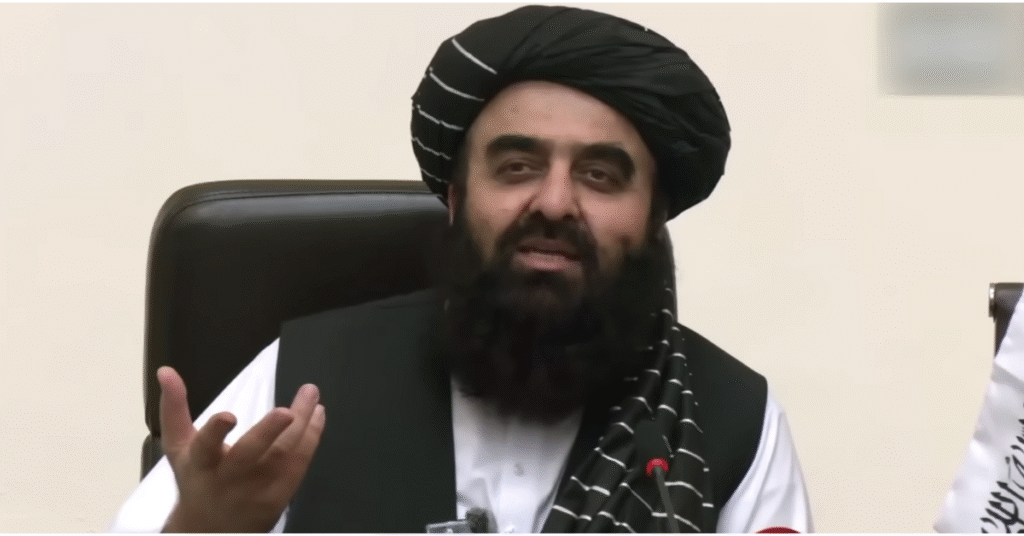
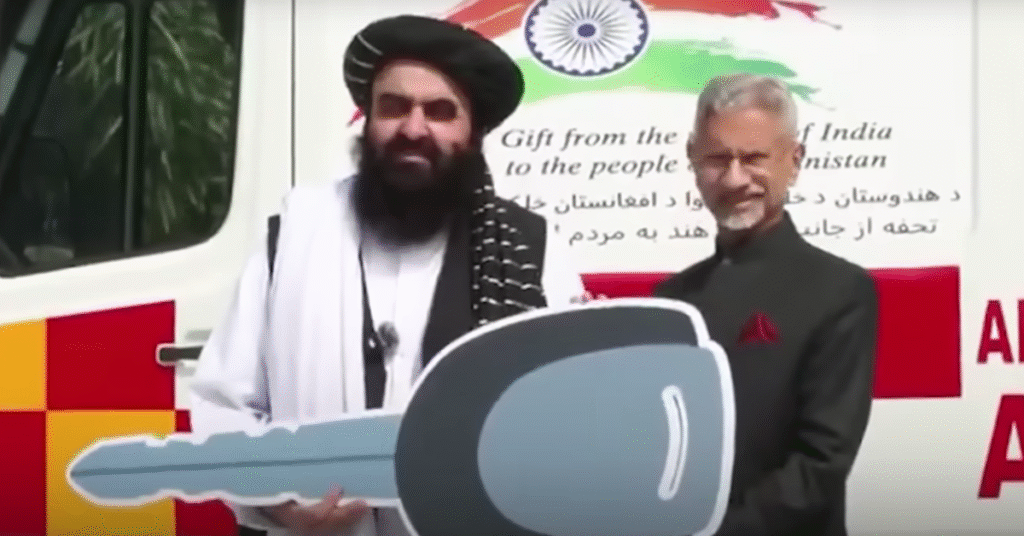
From October 9 to 16, 2025, Afghanistan’s acting Foreign Minister Amir Khan Muttaqi visited India — marking the first high-level Taliban visit since 2021. The trip didn’t signal any formal recognition from New Delhi but opened a door for practical conversations on trade, travel, connectivity, and security cooperation.
Rather than big political gestures, the visit focused on small, realistic steps that could help both sides deal with the ground realities in the region.
A Week in India: Key Dates and Itinerary
Amir Khan Muttaqi’s visit took place under a UN Security Council travel waiver issued for October 9–16, allowing him to travel to India for diplomatic meetings.
- Arrival (October 9): Muttaqi landed in New Delhi and began a week-long schedule of high-level talks and outreach activities.
- Deoband Visit (October 11): His itinerary included a stop at Darul Uloom Deoband in Uttar Pradesh — a seminary known for its religious influence across South Asia. The visit was seen as symbolic outreach to a key Islamic institution.
- Taj Mahal Plan (October 12): A visit to the Taj Mahal in Agra was planned but later cancelled by local authorities due to “security and logistical” reasons.
- Duration: The entire trip lasted around six to seven days, mixing government-level meetings with trade and consular discussions.
India’s Diplomatic Approach: Engage Without Recognizing
India has continued its non-recognition policy toward the Taliban regime but remains open to functional engagement on issues of national interest.
- No Recognition Yet: Officials in New Delhi maintained that India’s formal stance on the Taliban government has not changed.
- Embassy Upgrade: Talks hinted at India possibly restoring a full-fledged embassy in Kabul, upgrading beyond its current technical mission to support humanitarian and visa services.
- Careful Protocol: All meetings followed strict diplomatic protocol — avoiding flag displays or formal recognition symbols, while still offering hospitality and space for discussion.
Main Agenda: Trade, Travel, and Security
The visit’s agenda was largely practical, aiming to revive stalled connections between the two nations.
- Trade & Connectivity: Discussions centered on reopening trade routes, easing payment systems, and improving business-to-business links through Indian industry chambers.
- Consular & Visa Access: Talks included medical, educational, and business travel — three key areas where Afghan citizens rely heavily on India.
- Security Assurances: The Taliban assured India that Afghan soil will not be used for terrorism, addressing one of New Delhi’s long-standing concerns.
Symbolism: From Deoband to the Taj Mahal
Muttaqi’s visit was carefully designed to balance religious symbolism and cultural diplomacy.
The Darul Uloom Deoband stop carried deep meaning — the seminary has historically influenced religious education across the subcontinent, and the Taliban has often been linked (rightly or wrongly) to its teachings. Present-day Deoband scholars, however, have distanced themselves from the Taliban’s ideology.
Meanwhile, the planned Taj Mahal stop was intended to project openness and cultural respect. Its cancellation reflected the security sensitivity surrounding the visit. Together, the two destinations symbolized a subtle message: engagement through shared culture and faith, without formal recognition.
Also Read: – Massive Fire in Barangay 21-C Displaces Families in Davao City – lostnews
Press Access Controversy
The Amir Khan Muttaqi visit also sparked a minor controversy in New Delhi.
- During a media briefing at the Afghan Embassy, several women journalists were denied entry, which led to public criticism.
- A follow-up press event later included female reporters. India’s Ministry of External Affairs (MEA) clarified it had no role in the embassy’s internal media decisions.
- The episode reignited global debates on women’s rights under Taliban rule and drew attention to how India handles such sensitive diplomatic engagements.
Why the Visit Matters for India
For India, the visit was about maintaining influence in a rapidly shifting regional landscape.
- Strategic Leverage: Engaging with the Taliban — even informally — helps India counter terrorism threats and monitor developments along the Afghanistan-Pakistan border.
- Economic Footing: Restarting trade and humanitarian channels could stabilize supply routes, supporting both Indian exporters and Afghan consumers.
- Consular Normalization: A full embassy would make visa and medical travel smoother for thousands of Afghan citizens who come to India each year.
Why It Matters for the Taliban
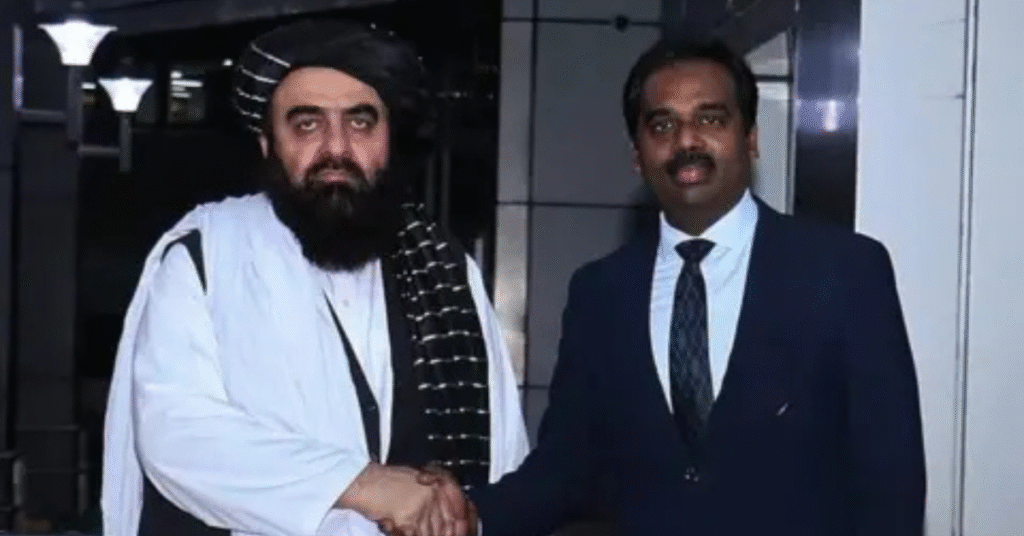
For the Taliban, the New Delhi trip was about regional legitimacy and economic relief.
- Expanding Partnerships: By visiting India, the Taliban showed it seeks partners beyond Pakistan, hoping to build more balanced regional relations.
- Business Push: Meetings with Indian business leaders signaled Kabul’s desire to restart trade, open payment channels, and attract investment.
- Optics & Symbolism: Engaging with India also sent a message to the global community — that Afghanistan is ready to engage diplomatically, even under sanctions.
Also Read: – Why Land Prices Are rising: Pros and Cons Explained – lostnews
The Geopolitical Context
The timing of the Amir Khan Muttaqi visit came amid shifting power dynamics in the region.
- Pakistan Factor: With relations between Kabul and Islamabad under strain, the Taliban appears to be using ties with India to gain bargaining leverage.
- Russia & the Region: The trip followed Russia’s recent outreach to Kabul, suggesting a broader diplomatic reset where the Taliban is trying to diversify allies.
- UN Framework: The visit was only possible due to a time-limited UN travel waiver, meaning the Taliban used the short window to secure as many practical outcomes as possible.
What to Watch Next
The trip might not have changed formal policy, but it set the stage for cautious engagement between the two sides. Key outcomes to track in the coming months include:
- Reopening of the Indian Embassy in Kabul.
- Trade facilitation and payment channels through Indian industry associations.
- Security cooperation based on verifiable anti-terror guarantees.
If these small steps progress smoothly, India and Afghanistan could move from symbolic gestures to real, ground-level cooperation — even without formal recognition.
Conclusion
Amir Khan Muttaqi’s visit was not about grand diplomacy but about testing the waters. It showed that both India and the Taliban are willing to talk, even without fully trusting each other yet.
For India, it’s a calculated step to keep its strategic presence in Afghanistan alive. For the Taliban, it’s a bid for regional legitimacy and economic breathing space.
In a region where politics often shift overnight, this trip could be the first quiet step toward a new chapter in India–Afghanistan relations.





2 thoughts on “Taliban Foreign Minister’s India Visit: What Amir Khan Muttaqi’s Trip Means for Both Countries”