
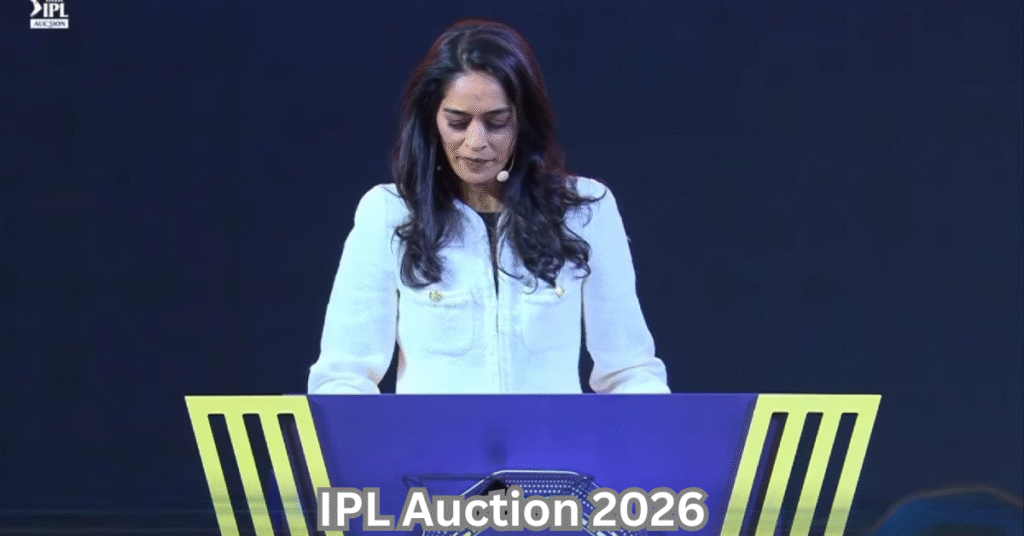
The IPL Auction 2026, held at Abu Dhabi’s iconic Etihad Arena, turned into one of the most gripping mini auctions the league has seen in recent years. What was expected to be a routine squad-balancing exercise quickly evolved into a high-intensity battle, as franchises spent aggressively to plug key gaps ahead of the new season. By the end of the day, all 10 teams had filled 77 player slots, with total spending exceeding ₹ 200 crore, underscoring just how seriously teams approached this auction.
Unlike mega auctions that involve full squad overhauls, the 2026 mini auction was all about precision buying. Teams came in with clear plans, specific player profiles in mind, and little patience for experimental bidding. The result was a dramatic mix of record-breaking purchases, unexpected bargains, and several well-known names walking away unsold.
Auction Overview: A Day of Focused Spending
The IPL 2026 Auction took place in Abu Dhabi as part of the league’s continued effort to expand its global footprint. Despite being a mini auction, the scale of spending and intensity rivalled that of some mega auctions in the past.
Across the day, franchises collectively spent around ₹215 crore, leaving only limited funds unused in most team purses. Rather than chasing big names blindly, teams such as Kolkata Knight Riders, Chennai Super Kings, Mumbai Indians, and Lucknow Super Giants focused heavily on role-specific players. Death bowlers, pace-bowling all-rounders, finishers, and versatile spinners were clearly the most in-demand categories.
This approach reflected a growing maturity in IPL auction strategies, where balance and flexibility now matter more than simply assembling star-studded line-ups.
Biggest Buys and Headline-Making Signings
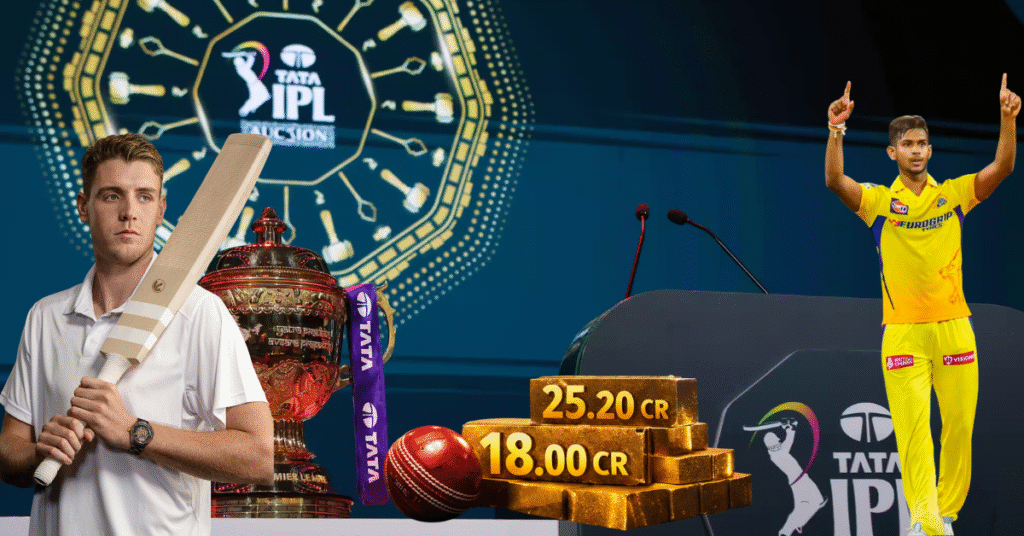
The defining moment of the auction came when Kolkata Knight Riders (KKR) went all out for Australian all-rounder Cameron Green. After an intense bidding war, KKR secured Green for a figure exceeding ₹25 crore, making him the most expensive overseas purchase of the auction and one of the priciest players in IPL history.
KKR didn’t stop there. The franchise further stunned observers by paying ₹18 crore for Sri Lankan fast bowler Matheesha Pathirana. Known for his unorthodox action and deadly yorkers, Pathirana is viewed as a long-term solution for death-over bowling, an area where many teams continue to struggle.
Another major talking point came from Chennai Super Kings (CSK), who created headlines by spending ₹14.20 crore on uncapped left-arm spinner Prashant Veer. The move instantly placed Veer among the most expensive uncapped players ever bought in an IPL auction and highlighted CSK’s confidence in domestic talent.
Also Read: – West Indies Cricket Journey: From 1975 World Champions to 2025 a Team in Transition – lostnews
Team-Wise Breakdown of Key Purchases
Below is a team-wise overview of some of the most discussed moves from the IPL Auction 2026. This section focuses on notable purchases rather than an exhaustive list, offering insight into how each franchise shaped its squad.
Kolkata Knight Riders (KKR)
KKR emerged as one of the most aggressive teams of the auction.
- Cameron Green was signed for approximately ₹25.20 crore, with the franchise clearly identifying him as the centrepiece of their all-round setup.
- Matheesha Pathirana joined for ₹18 crore, giving KKR a genuine strike bowler capable of controlling high-pressure overs.
With a large purse and a clear vision, KKR were among the first teams to complete their full squad, signalling a decisive and confident auction strategy.
Chennai Super Kings (CSK)
CSK once again showcased their willingness to back young Indian talent.
- Prashant Veer, an uncapped left-arm spinner, was picked for ₹14.20 crore, a bold investment aimed at long-term returns.
- Kartik Sharma, another domestic spinner, was signed for a similar amount, strengthening CSK’s spin-heavy philosophy.
- West Indies international Akeal Hosein was added for ₹2 crore, providing depth as both a spinner and a lower-order batter.
CSK’s buys reflected their traditional approach of blending youth with experience.
Mumbai Indians (MI)
Mumbai Indians focused on flexibility and squad depth.
- Josh Inglis, the Australian wicketkeeper-batter, fetched around ₹8.5–8.6 crore, offering MI a dynamic middle-order option.
- Young all-rounder Atharva Ankolekar was secured at his base price of ₹30 lakh, viewed as a long-term prospect.
- Domestic seamer Mohammad Izhar also joined for ₹30 lakh, adding bench strength.
MI avoided headline-grabbing bids but quietly strengthened critical areas.
Lucknow Super Giants (LSG)
LSG arguably walked away with some of the best value buys.
- Wanindu Hasaranga, the Sri Lankan leg-spinning all-rounder, was picked at his base price of ₹2 crore, a deal many considered a bargain.
- South African pacer Anrich Nortje also joined for ₹2 crore, boosting LSG’s pace arsenal.
The franchise focused on experience and impact rather than chasing inflated prices.
Rajasthan Royals (RR)
Rajasthan Royals kept a relatively low profile but made calculated additions.
- Indian leg-spinner Ravi Bishnoi attracted a bid of around ₹7.20 crore, strengthening RR’s spin department.
- Domestic batter Aman Rao was added for ₹30 lakh as a developmental option.
RR largely stayed away from bidding wars, sticking to disciplined spending.
Punjab Kings (PBKS)
Punjab Kings used the auction primarily to fill specialist roles.
- Pravin Dubey was signed for ₹30 lakh as a leg-spin option.
- Vishal Nishad, initially unsold, was later picked in the accelerated round for ₹30 lakh, highlighting how teams often revisit overlooked players.
PBKS relied on continuity from previous seasons rather than major new investments.
Sunrisers Hyderabad (SRH)
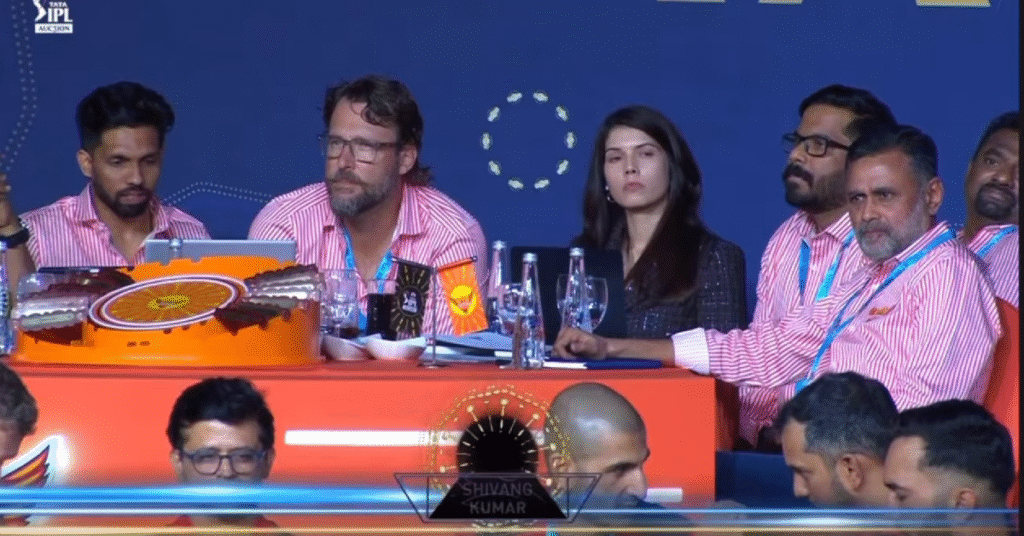
SRH focused on expanding their domestic pace pool.
- Sakib Hussain and Onkar Tarmale were both signed for ₹30 lakh each.
- Uncapped all-rounder Salil Arora fetched around ₹1.50 crore, offering versatility in both batting and bowling.
These moves reflected SRH’s intent to build bench strength.
Other Noteworthy Moves Across Teams
Beyond the team-specific highlights, several individual signings stood out:
- Pathum Nissanka was bought for ₹4 crore to strengthen the top order.
- Veteran finisher David Miller was secured for ₹2 crore, adding experience in pressure situations.
- Prithvi Shaw, who went unsold initially, eventually found a buyer for approximately ₹75 lakh, sparking debate given his potential and inconsistent form.
Also Read: – Sri Lanka Cricket’s Journey: From (1996) Glory Days to a (2025) Hopeful Comeback – lostnews
Notable Unsold Players
As with every IPL auction, a number of surprising names went unsold. Domestic players like Mahipal Lomror and Kamlesh Nagarkoti failed to attract bids, while all-rounders such as Sanvir Singh and KC Cariappa also missed out.
On the international front, players, including Wiaan Mulder, were overlooked due to limited overseas slots and teams prioritising specific skill sets. However, history suggests that many unsold players remain on franchise radars for mid-season replacement opportunities.
Final Thoughts
The IPL Auction 2026 proved that even a mini auction can deliver maximum drama. Record-breaking bids, brave investments in uncapped players, and shrewd bargain buys combined to make this one of the most talked-about auctions in recent memory. As teams now turn their attention to on-field preparations, the true impact of these decisions will unfold during the season.
For fans and analysts alike, this auction once again highlighted why the IPL remains unmatched in its blend of sport, strategy, and spectacle.






1 thought on “IPL Auction 2026: Record Bids, Smart Buys, and Surprising Misses at Abu Dhabi Mini Auction”