
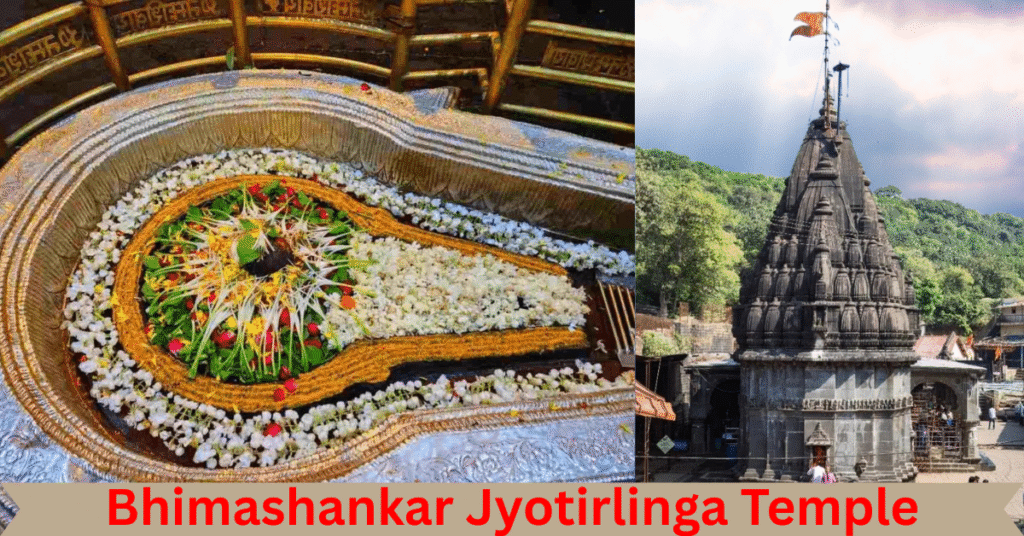
Bhimashankar Jyotirlinga in Pune, Maharashtra, is one of the twelve sacred Jyotirlingas of Lord Shiva and a beloved pilgrimage for devotees across India. Set deep in the Sahyadri hills and surrounded by dense forest, it blends spiritual power, mythological stories, ancient architecture, and natural beauty in one place.
Where it is and why it matters
Bhimashankar Temple is located about 110 km from Pune, on a mountain in the Sahyadri range. The temple sits within the Bhimashankar Wildlife Sanctuary, so the area feels calm, green, and full of life. Many pilgrims visit not just to pray, but also to enjoy the peaceful forest and hilly views.
Bhimashankar is one of the twelve Jyotirlingas of Lord Shiva. People believe Shiva appeared here as a pillar of light. Devotees come to pray for blessings, peace, and strength in life. According to legend, the Bhima (Bhimarathi) river begins here. It is said to have formed from Shiva’s sweat after a fierce battle, which is why the place is seen as both holy and powerful.
The main legends: Tripurasura and Bhima
There are two popular stories connected with Bhimashankar, both found in spiritual traditions and retellings.
- Tripurasura legend: A powerful demon named Tripurasura received boons after deep penance, which made him almost invincible. Over time, he became arrogant and troubled people, and even the gods. The gods prayed to Shiva, and with the help of Goddess Parvati, Shiva appeared in a united form and defeated Tripurasura. After this victory, Shiva took the form of Bhimashankar and stayed in this region, and the temple marks this sacred presence.
- Bhima (son of Kumbhakarna) legend: Another legend speaks of Bhima, the son of Kumbhakarna, from the Ramayana. Angry over his father’s death, Bhima performed penance and gained great power. He captured a devout king named Kamrupeshwar, who continued to worship Shiva even in prison, making a small shivling inside. When Bhima tried to strike the shivling, Shiva appeared, destroyed Bhima, and protected the devotee. The gods then requested Shiva to remain there as a Jyotirlinga, now known as Bhimashankar.
Both legends highlight the same core message: when the world is troubled, sincere devotion and divine grace restore peace. The temple preserves that memory and faith in a living way.
Also Read: Omkareshwar Jyotirlinga: Where the River Draws “Om” and Shiva Lives in Light – lostnews
Architecture and the old temple
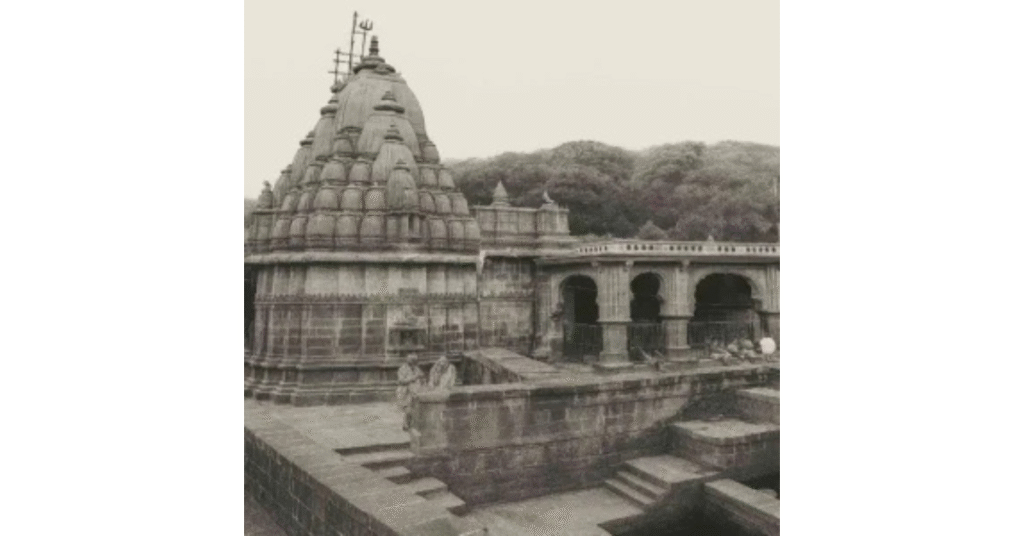
The Bhimashankar temple shows a mix of styles. The sanctum and core structure reflect Nagara influences (a northern Indian style) and also have elements similar to Hemadpanti work common in the Deccan. The shikhara (spire) and sabhamandap (assembly hall) were enhanced during the Maratha period; Nana Phadnavis, an important statesman of the 18th century, is credited with adding and restoring key parts. The linga is considered Swayambhu, meaning self-manifested, which adds to the temple’s sacredness for devotees.
Inside the complex, carvings on pillars and door frames show deities and figures with fine detail. The garbhagriha (sanctum) sits at the center, where the Jyotirlinga is worshipped daily. Around the temple, there are sacred ponds or teerthas, such as Mokshakunda and other kunds that pilgrims visit for holy dips and prayers.
Nature, sanctuary, and the river
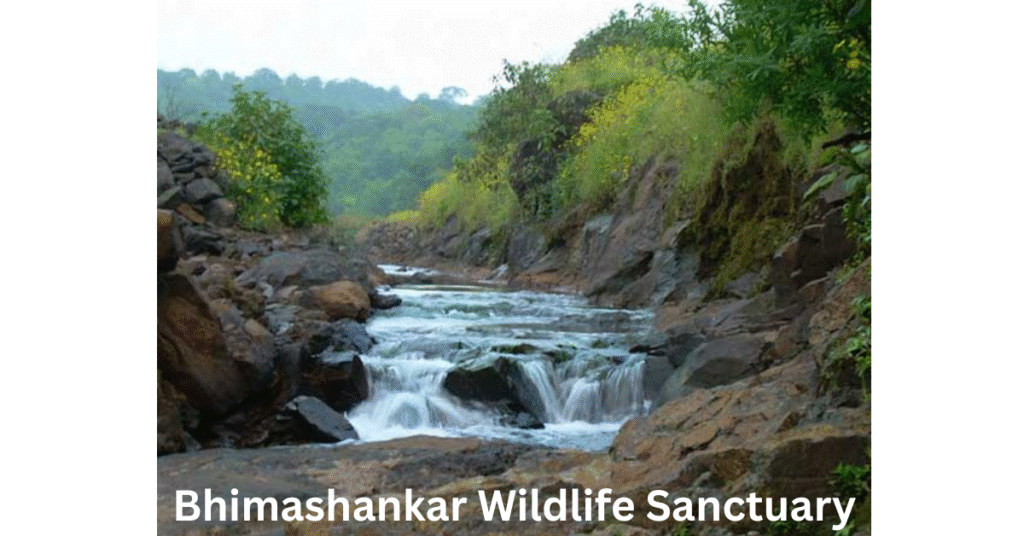
One special thing about Bhimashankar is its natural setting. The temple is surrounded by the Bhimashankar Wildlife Sanctuary, home to rich biodiversity, including the Indian Giant Squirrel (Shekru), which is the state animal of Maharashtra. The forested pathways, streams, and seasonal waterfalls add to the pilgrimage experience, especially during and after the monsoon.
Many believe the Bhimarathi or Bhima River starts here. In the legend, after Shiva’s battle, the sweat from his body formed the river, symbolizing life and flow even after struggle. This story helps devotees connect nature with spiritual meaning during their visit.
Festivals, rituals, and devotion
Bhimashankar sees large crowds during Mahashivratri, Shravan (the holy month for Shiva), and other auspicious days. Devotees line up to perform abhishek (ritual bathing of the shivling) with water, milk, or bilva leaves. Many appreciate that offerings can be taken close to the sanctum, making the experience personal and soulful. Aarti ceremonies run through the day, and the temple atmosphere is simple yet powerful, reflecting the forest shrine’s character.
Travel tips and how to reach
- From Pune: The temple is about 110 km from Pune and can be reached by road via Manchar or via Rajgurunagar (Khed). The last stretch climbs into the hills so that travel time can vary depending on the weather.
- Best season: The post-monsoon and winter months are pleasant. Monsoon makes the forest lush, but roads can be slippery, so caution is needed.
- Sanctuary rules: As it is inside a wildlife sanctuary, visitors are expected to respect nature, avoid littering, and follow local guidelines. Early mornings and evenings can be cool, so light warm clothing helps, especially in winter.
Also Read: The Timeless Story of Mahakaleshwar Jyotirlinga, Ujjain – lostnews
Present-day significance
Today, Bhimashankar is both a spiritual center and a nature retreat. The temple management and local authorities maintain the complex and routes, as the site draws pilgrims, trekkers, and travelers throughout the year. The blend of old stonework, sacred water tanks, forest trails, and quiet shrines makes it a place where one can slow down, pray, and feel closer to the divine.
Beyond pilgrimage, the area also encourages eco-awareness. The sanctuary’s status has brought attention to conserving the Western Ghats’ unique ecosystem. For many, the journey to Bhimashankar becomes a reminder that faith and nature can go hand in hand.
Simple summary for readers
- Bhimashankar is one of the twelve Jyotirlingas of Lord Shiva, located in the Sahyadri hills near Pune, inside a wildlife sanctuary.
- Two main legends are linked to this temple: Shiva’s victory over Tripurasura, and the story of Bhima (Kumbhakarna’s son), who attacked a devotee until Shiva intervened and manifested here as the Jyotirlinga.
- The temple architecture shows Nagara and Hemadpanti touches; parts were enhanced during the Maratha era by Nana Phadnavis, and the linga is believed to be self-manifested (Swayambhu).
- The region is green, serene, and historically tied to the origin of the Bhimarathi river, adding natural beauty to the spiritual journey.
- Pilgrims visit year-round, especially in Shravan and on Mahashivratri, to seek blessings, peace, and strength in life.
Bhimashankar Jyotirlinga offers a quiet, powerful experience—where ancient stories, living faith, and the forest’s calm meet on a hilltop in Maharashtra.






1 thought on “Bhimashankar Jyotirlinga: A Sacred Pilgrimage in the Sahyadri Hills”