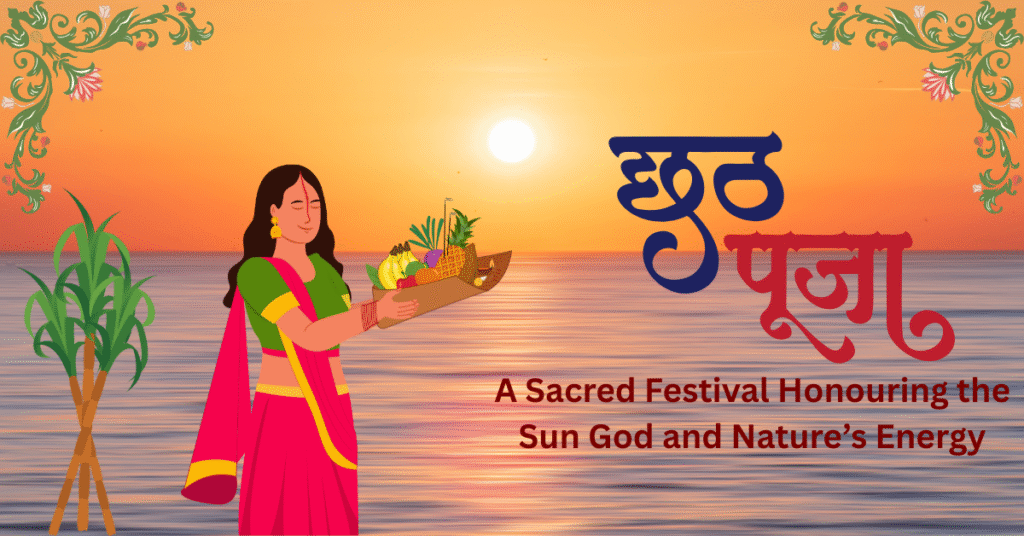
The Spiritual Essence of Chhath Puja: Devotion, Discipline, and Gratitude
Chhath Puja—also called Surya Shashthi Vrat—is one of the oldest living Hindu festivals dedicated to the Sun, observed with extraordinary discipline and devotion across Bihar, eastern Uttar Pradesh, Jharkhand, and Nepal’s Madhesh region, as well as by a growing global diaspora. It unfolds over four days, six days after Diwali, honoring Surya (the Sun) and Chhathi Maiya, a protective mother goddess associated with fertility, children’s well-being, and long life. What makes Chhath unique is its worship of both the setting and the rising Sun, a rare symmetry that blends gratitude with renewal in equal measure.
Origin and Significance of Chhath Puja
Chhath is native to the eastern Gangetic plains, with deep roots in Bihar and adjoining regions of Uttar Pradesh and Jharkhand, as well as in southern Nepal. Over time, migration carried it to every major Indian city and to diaspora hubs worldwide. Its cultural heartland remains the riverbanks and ponds of Bihar. Patna’s ghats famously swell with song and incense at dusk and dawn as families gather for offerings known as arghya. As urban Indians relocated, they recreated these sacred spaces in lakes, reservoirs, and even temporary water tanks. Chhath has become a shared, public rite far from home.
Who introduced Chhath Puja? Myths and memory
Unlike a sect founded by a single reformer, Chhath grew from layered traditions. Its origin stories are preserved in epic memory and regional lore. References in the Ramayana and Mahabharata describe Surya worship on the sixth lunar day (shashthi). Sita, Draupadi, Kunti, and Karna are all linked to early observances. Many Bihari traditions credit Karna—son of Surya and Kunti—as the first to perform the vrata. Others recall Draupadi’s fast for the Pandavas, and Sita’s observance after returning to Ayodhya. These narratives frame Chhath as an ancient, pan-epic vow, not as a doctrine introduced by a single historical figure.
Also Read:- 12 Jyotirlingas of India Spiritual Gems of India
Four Main Days of Chhath Puja and Their Importance
Chhath is austere, exacting, and communal. Devotees emphasize ritual purity, environmental cleanliness, and precise timing aligned with sunset and sunrise.
- Day 1 (Nahay–Khaye): A purifying bath in a river or clean water body begins the vow. Homes are scrubbed, and a simple sattvic meal is shared to prepare for fasting. The act signals stepping into ritual time, clean in body and intent.
- Day 2 (Kharna): A daylong fast ends after sunset with a minimal, sanctified meal. Often, this meal is gur–chawal kheer, offered first to the earth as thanks and then shared with family. From here, many observe the nirjala phase, entering a 36-hour fast without food and water.
- Day 3 (Sanjh ka Arghya): Families carry soops (bamboo trays) filled with seasonal produce—sugarcane, thekua, fruits—and diyas to the water’s edge. As the sky turns copper, devotees offer arghya to the setting Sun. The evening also features Kosi. Under a sugarcane canopy, earthen lamps glow around baskets of prasad. This scene knits neighborhood and kin into a circle of light.
- Day 4 (Bhor ka Arghya): Before dawn, devotees return to offer arghya to the rising Sun. The fast concludes as first light touches the water. Prasad is shared widely, extending the blessing to neighbors, colleagues, and passersby. This pairing—reverence for dusk and dawn—captures Chhath’s philosophy of balance. It honors endings and beginnings together.
Deities at the center: Surya and Chhathi Maiya
Surya is worshiped as the giver of life, health, and vitality; in an agrarian world and a modern city alike, the Sun remains the clock of seasons and the engine of harvests. Alongside Surya stands Chhathi Maiya (also called Chhath Mata), a maternal protector associated with Ushas, the Vedic dawn. Devotees address her directly when praying for children’s health, fertility, and family well-being, which is why the vrata is often led by women—even though men also observe it. This intimate mother–child bond gives Chhath its emotional core.
Why Chhath Puja is “different”
- A solar vow with twin horizons: Most Hindu worship centers on deities in temples; Chhath steps into open air and water, greeting the Sun at dusk and dawn with bare offerings and bare feet. It is one of the few festivals that equally venerate the setting and rising Suns.
- A 36-hour nirjala fast: The discipline is exacting—devotees often describe it as a test of body and mind, a sharpening of focus that makes gratitude feel physical, not abstract.
- Cleanliness as theology: Riverbanks are swept, ghats repaired, and biodegradable offerings prioritized; cleanliness and ecological care are not add-ons but part of the vow itself.
- Community in motion: The entire neighborhood moves together—cooking thekua, tying sugarcane arches, lighting diyas, and forming living corridors down to the waterline. Chhath transforms urban space into a public mandir under the sky.
Dates and observance
Chhath occurs twice annually—in Chaitra (March–April) and Kartik (October–November)—with the Kartik observance six days after Diwali as the principal celebration. The festival’s timing follows the lunisolar calendar and aligns with harvest rhythms, underscoring gratitude for sustenance and the desire for health in the season ahead. In 2025, public almanacs note the Kartik Chhath window across late October, with communities planning four-day observances and municipal preparations on riverfronts and lakes.
Chhath Puja Celebrations Across India
- Bihar heartland: Patna, Gaya, Bhagalpur, Muzaffarpur—ghats brim with processions at sunset and dawn; folk songs and Bhojpuri hymns carry across the water.
- Eastern Uttar Pradesh and Jharkhand: Cities and villages keep the same four-day rhythm; Kosi ceremonies light up lanes with sugarcane canopies and earthen lamps.
- Nepal’s Madhesh and Terai: The festival crosses borders seamlessly, reflecting shared Maithili and Bhojpuri culture along the plains.
- Diaspora hubs: From Delhi’s lakes to Mumbai’s beaches, from Dubai creeks to New Jersey reservoirs, migrants rebuild the ritual landscape with community associations and city permits—proof that Chhath travels wherever its people do.
Legends that still live
Epics frame Chhath as a vow taken in moments of trial and hope. Sita’s observance after returning to Ayodhya, Kunti’s Surya vrata tied to Karna, and Draupadi’s vow during exile all situate Chhath at the intersection of endurance and grace. Whether approached as history or sacred story, these episodes keep the vrata personal: a promise made at dusk, an answer received at dawn.
What Chhath means—beyond ritual
- Gratitude you can touch: The soop in your hands, the river at your feet, the weight of a thekua in the tray—Chhath turns thankfulness into a physical act.
- Family health and children’s futures: Prayers to Chhathi Maiya center around fertility, safe childbirth, and long life for children—reaffirming the home as the first altar.
- Ecology as devotion: Clean ghats, minimal plastic, and seasonal offerings make environmental care part of worship—an ethic passed down as custom rather than lecture.
- Equality on the ghat: There is no priestly monopoly here; most offerings are made directly by the devotee to the Sun. The riverbank flattens hierarchies: anyone with a lamp and a vow has a place.
Also Read:- Grishneshwar Jyotirlinga – Lord of Compassion and the 12th Jyotirlinga – lostnews
Essential items and symbols
- Soop and daura: Bamboo trays and baskets carrying fruits, thekua, coconuts, and diyas—simple, local, and handmade.
- Thekua: A sturdy, fried sweet made with wheat flour, jaggery, and ghee—travels well, lasts the night, and tastes like home the next morning.
- Sugarcane arches (Kosi): Arbors tied with canes, lamps within—a small architecture of hope that lights the lane and frames the prayer.
A final word for first-time observers
If you’re joining Chhath Puja for the first time, arrive early at the water’s edge. Leave your shoes before the last stretch. Stand back to keep the path clear for those carrying soops. When the diyas flicker in the wind and the first sunray lands on the water, you’ll understand why this vow traveled so far without losing its soul. It isn’t spectacle; it’s steadiness—an old promise kept twice a day, at dusk and at dawn.