
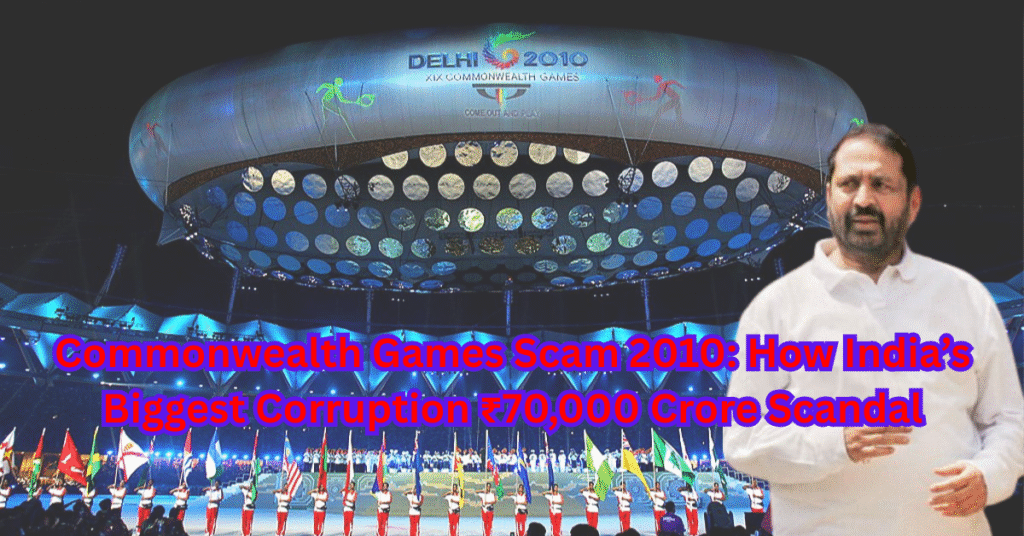
Introduction — When Pride Turned to Embarrassment
The Commonwealth Games Scam 2010 stands as one of India’s most shocking corruption scandals. What was meant to be a grand moment of pride — hosting the Commonwealth Games in New Delhi — turned into an embarrassing chapter of greed, fraud, and mismanagement.
The scam revolved around the large-scale misuse of public funds meant for the preparation and organization of the Games. Officials and contractors were accused of inflating prices, creating fake bills, awarding shady tenders, and accepting massive kickbacks for everything from sports equipment to infrastructure projects.
What should have been a symbol of India’s growing global reputation instead exposed how corruption can cripple national ambition. With an estimated loss of over ₹70,000 crore, the Commonwealth Games Scam 2010 became a painful reminder of how political negligence and greed can turn a dream event into a national embarrassment
How India Got to Host the 2010 Commonwealth Games
India won the bid to host the 2010 Commonwealth Games in April 2003, defeating Canada in the final round. The decision brought excitement across the country — this was India’s chance to showcase its growth, infrastructure, and sporting spirit to the world.
The government formed the Organising Committee (OC), chaired by Suresh Kalmadi, a senior Congress politician. Several government departments — including the Delhi government, CPWD, NDMC, MCD, and DDA — were given separate responsibilities for infrastructure and logistics.
However, as the Games’ deadline drew closer, warning signs began to appear. Budgets kept rising, tenders were awarded in haste, and quality standards were ignored. These were the first cracks in what would soon become the Commonwealth Games Scam 2010.
The Start of the Commonwealth Games Scam 2010
The preparation for the Games was marred by poor planning and widespread corruption. By mid-2010, the Central Vigilance Commission (CVC) had flagged major irregularities in over 14 key projects. It reported that tenders were manipulated to benefit selected companies, contracts were overpriced, and several firms had little or no prior experience.
Also Read: – 2G Spectrum Scam (2008): How One of India’s Biggest Telecom Scandals Unfolded – lostnews
Here’s how the scam took shape:
1. Inflated Contracts
Contracts for almost everything — from construction to basic supplies — were overpriced.
- The Time-Scoring-Result system was awarded to Swiss Timing Ltd. for ₹141 crore, even though the actual cost was much lower.
- Street-lighting projects in Delhi were inflated by crores through manipulated tenders.
- Items like toilet rolls, umbrellas, and chairs were billed at 10–20 times their normal prices.
2. Fake and Unqualified Vendors
Some companies that received contracts didn’t even exist at their registered addresses. Others were set up just before the bidding, indicating that the tender process was fixed. Fake bills were used to siphon off funds meant for genuine work.
3. Last-Minute Chaos and Poor Quality
When foreign athletes arrived in Delhi, they found the Games Village in poor condition — broken taps, unclean rooms, and unfinished plumbing. Images of leaking ceilings and flooded stadiums went viral worldwide, turning what should have been a proud moment into a global embarrassment.
Who Was Behind the Commonwealth Games Scam 2010
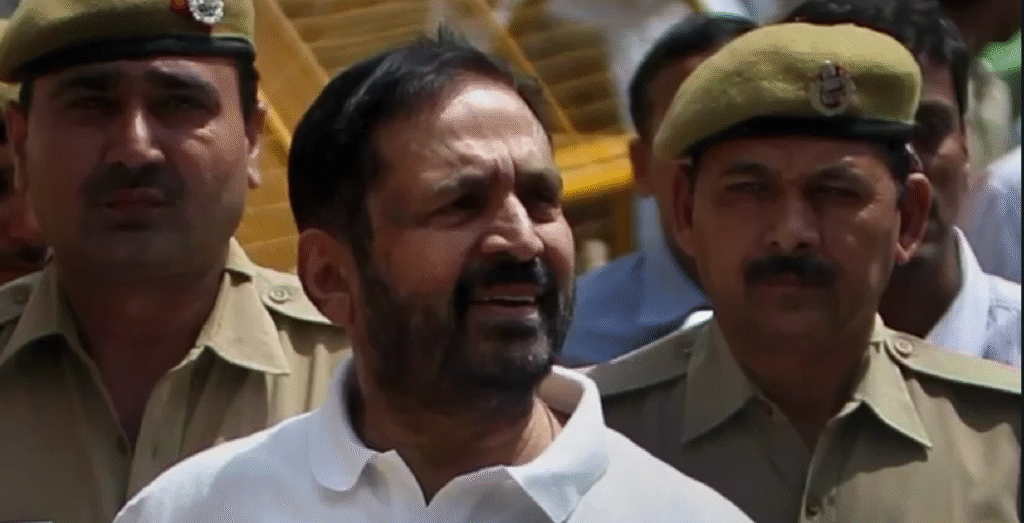
The Commonwealth Games Scam 2010 involved a wide network of people — politicians, bureaucrats, and contractors. The main figures named in the investigation included:
- Suresh Kalmadi – Chairman of the Organising Committee and Member of Parliament. He became the main accused and was arrested in April 2011 by the CBI on charges of conspiracy and cheating.
- Lalit Bhanot – Secretary-General of the OC, accused of misusing his position to approve inflated deals.
- T.S. Darbari and M. Jayachandran – Senior officials in the OC linked to irregular payments for the Queen’s Baton Relay.
- Contractors and firms such as AM Films (UK), Sweka Powertech, and others were also named for manipulating tenders and receiving inflated payments.
- Sheila Dikshit, then Chief Minister of Delhi, came under political scrutiny as her government oversaw infrastructure and city projects for the Games, though no criminal charges were proven.
Investigations and Legal Actions
As the scandal broke, multiple agencies stepped in to investigate the Commonwealth Games Scam 2010 — including the Central Bureau of Investigation (CBI), the Enforcement Directorate (ED), the Comptroller and Auditor General (CAG), and the Central Vigilance Commission (CVC).
The CAG Report
The CAG’s detailed report accused the Organising Committee of financial irregularities, saying the Games were used as an opportunity for “massive waste and mismanagement of public funds.”
CBI Action
In 2011, the CBI filed charges against Suresh Kalmadi and nine others for awarding the ₹141-crore Time-Scoring-Result system contract illegally. They were booked under sections of the Indian Penal Code (IPC) for cheating, forgery, and criminal conspiracy, along with charges under the Prevention of Corruption Act (PCA).
ED Investigation
The Enforcement Directorate (ED) also investigated money laundering and foreign remittances associated with payments to companies in the UK and Switzerland.
Court Cases and Convictions
- Several MCD officials and the director of Sweka Powertech were convicted in 2015 for manipulating street-lighting tenders.
- Suresh Kalmadi and other senior officials were released on bail after spending about 10 months in jail, but cases against them continued for several years.
- A Parliamentary Committee later cleared then-Prime Minister Manmohan Singh and the PMO of direct involvement in the scam.
Public Reaction and Global Impact
When news of the Commonwealth Games Scam 2010 broke, the entire nation reacted with shock and anger. The Games that were meant to elevate India’s global status ended up tarnishing its image.
International media, including BBC and CNN, criticized the corruption, calling it a “national disgrace.” Pictures of dirty athlete rooms and broken bridges spread worldwide, raising doubts about India’s ability to host global events.
For the public, the outrage wasn’t just about the money — it was about betrayal. Crores of rupees meant for improving sports and infrastructure had been pocketed by those in power.
Consequences and Reforms After the CWG Scam
The fallout of the Commonwealth Games Scam 2010 led to several long-term changes:
- Stricter Tender Rules: Government departments were directed to adopt transparent e-tendering systems.
- Public Oversight: More attention was given to monitoring big-budget projects and mega-events.
- Political Impact: The scandal severely damaged the UPA government’s image, contributing to growing anti-corruption sentiment across India.
- Rise of Anti-Corruption Movements: The scam was one of the triggers of the 2011 Anna Hazare-led movement, which demanded stronger laws against corruption.
Lessons from the Commonwealth Games Scam 2010
The scandal taught India several key lessons:
- Transparency matters: When projects worth thousands of crores are handled without public oversight, corruption thrives.
- Accountability is essential: Politicians and officials must face real consequences, not just public criticism.
- Infrastructure should outlive events: Many stadiums built for the Games now lie underused or poorly maintained.
- Ethics in public service: True development must be built on integrity, not shortcuts and greed.
Also Read: – Top 11 Biggest Scams That Shocked India: A Look at How Billions Were Lost – lostnews
Conclusion — A Lost Opportunity for India
The Commonwealth Games Scam 2010 remains a painful reminder of how corruption can overshadow even the grandest ambitions. What should have been a celebration of Indian talent and teamwork became a cautionary tale of greed and mismanagement.
Though some officials were punished, many questions remain unanswered: where did all the money go, and have systems really changed? For India, the CWG 2010 was more than just a sporting event; it was a lesson in the cost of corruption, both financially and morally.






1 thought on “Commonwealth Games Scam 2010: How a Grand Sporting Dream Became India’s Biggest Corruption ₹70,000 Crore Scandal”