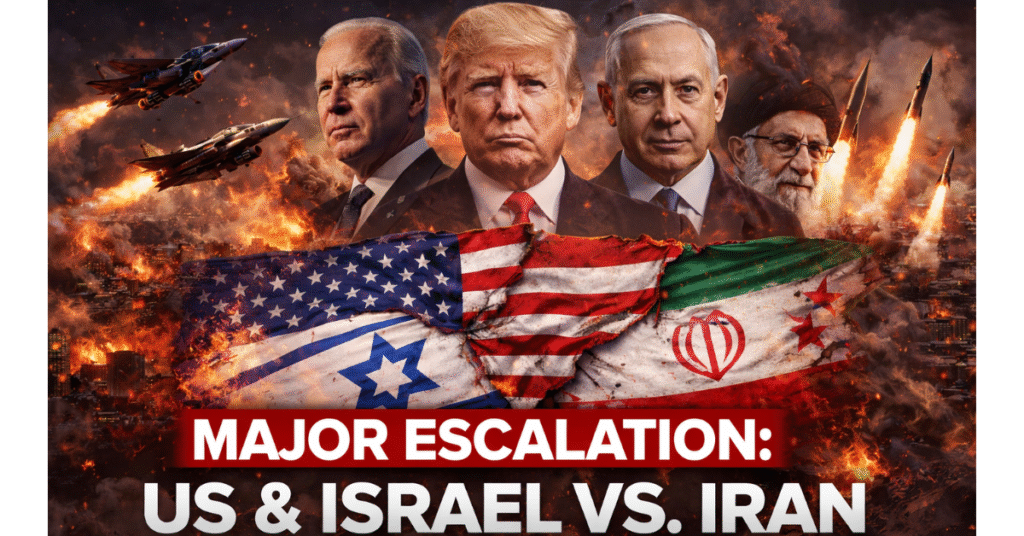
The world woke up to one of the most dramatic and dangerous developments in recent Middle East history. A coordinated military operation by the United States and Israel has pushed tensions with Iran to a level many experts feared but hoped would never happen.
Airstrikes carried out deep inside Iranian territory targeted military installations and facilities linked to Iran’s nuclear infrastructure. Early reports suggest that the strikes killed senior Iranian officials, including Iran’s Supreme Leader, Ayatollah Ali Khamenei. If confirmed, this would mark one of the most significant escalations in the region in decades.
Iran has responded with force. Missiles and drones have been launched toward Israeli cities and U.S. military bases in the Gulf region. The cycle of action and retaliation has triggered fears of a broader regional war — one that could reshape global politics, energy markets, and security systems.
This is not just another Middle East flare-up. It is a potential turning point.
What Happened?
According to initial reports, the United States and Israel coordinated precision airstrikes aimed at crippling Iran’s military command structure and nuclear capabilities. Targets reportedly included:
- Military command centers
- Missile storage facilities
- Nuclear-related infrastructure
- Strategic Revolutionary Guard sites
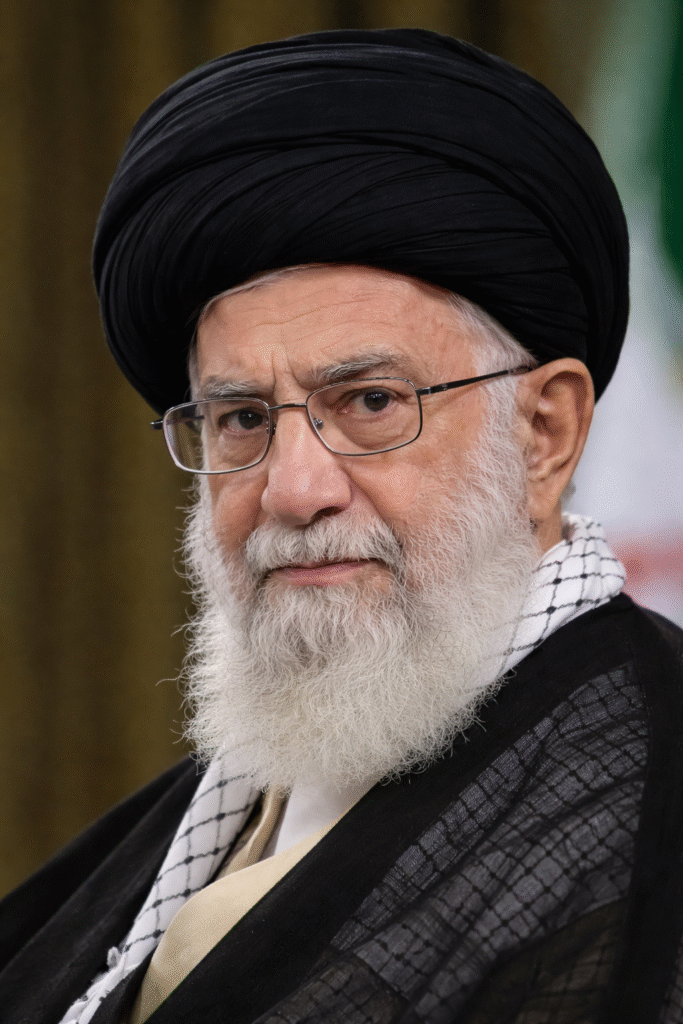
The alleged death of Ayatollah Ali Khamenei has shocked the region. As Iran’s Supreme Leader, he held ultimate authority over military, political, and nuclear decisions. His removal — especially through foreign military action — represents a direct blow to Iran’s leadership structure and national pride.
Within hours of the strikes, Iran responded. Missiles and armed drones were launched toward Israeli territory. Some targeted major population centers, while others aimed at American bases across the Gulf. Sirens reportedly sounded across multiple cities, and regional air defense systems were activated.
The situation remains fluid and highly volatile.
Why This Is So Significant
Tensions between the United States, Israel, and Iran are not new. For years, disagreements over Iran’s nuclear program, regional influence, and support for armed groups in Lebanon, Syria, and Gaza have kept the region on edge.
However, this latest development crosses a line.
Direct, coordinated strikes deep inside Iran — especially ones that reportedly eliminate top leadership — move beyond covert operations or proxy conflicts. This is an open confrontation between states.
That shift changes everything.
Iran’s Retaliation: Missiles and Drones
Iran’s response was swift. The country launched waves of missiles and drones targeting:
- Israeli urban areas
- Strategic infrastructure
- U.S. military bases in Gulf nations
Iran has heavily invested in missile and drone technology over the past decade. These systems are designed to bypass air defenses and overwhelm targets with numbers.
Israel’s air defense systems reportedly intercepted many incoming threats, but even partial impacts are enough to raise fears of a wider war. Meanwhile, U.S. bases in the region have increased alert levels, and additional defensive measures are being deployed.
The danger lies in escalation. If casualties mount on either side, pressure for further retaliation could grow quickly.
Global Reaction: Calls for Calm — and Support
World leaders have reacted with a mix of alarm and caution.
Many governments are urging immediate de-escalation, fearing that continued military exchanges could ignite a full regional conflict. Diplomatic channels are reportedly active behind the scenes, with efforts to prevent further strikes.
However, reactions are not uniform.
Some countries have voiced support for the strikes, framing them as a defensive move against a potential nuclear threat. They argue that if Iran’s nuclear program was nearing a weapons capability, decisive action was necessary.
Others warn that military action risks pushing Iran toward even more aggressive policies and could destabilize the entire region.
The divide reflects deeper geopolitical rivalries and alliances that have shaped global politics for years.
Risk of a Broader Regional War
One of the most serious concerns is the possibility that the conflict could spread beyond the three main players.
The Middle East is interconnected through alliances, proxy forces, and security agreements. Several Gulf nations host U.S. military bases. Armed groups aligned with Iran operate in countries like Lebanon, Syria, and Iraq.
If those groups become directly involved, the conflict could quickly widen.
A broader war could involve:
- Missile exchanges across multiple borders
- Naval confrontations in the Persian Gulf
- Cyberattacks targeting infrastructure
- Attacks on energy facilities
Even a limited expansion would dramatically increase instability.
The Strait of Hormuz: A Global Pressure Point
One of the most critical flashpoints is the Strait of Hormuz.
This narrow waterway connects the Persian Gulf to global shipping routes. A significant percentage of the world’s oil supply passes through it every day.
If Iran attempts to disrupt shipping in retaliation — whether through naval maneuvers, mines, or missile threats — global oil prices could spike sharply.
Higher oil prices would affect:
- Fuel costs worldwide
- Transportation expenses
- Inflation levels
- Stock markets
For countries heavily dependent on energy imports, the economic shock could be immediate.
Also Read: – From Allies to Adversaries: The Complex History of Iran-Israel Relations – lostnews
Impact on Global Markets
Financial markets react quickly to uncertainty, especially when energy supply is involved.
Investors are closely watching:
- Oil price fluctuations
- Stock market volatility
- Currency movements
- Defense sector performance
Historically, Middle East conflicts have tended to drive oil prices higher. Even the threat of disruption can trigger speculation and price surges.
For everyday people, this could mean higher petrol prices, increased shipping costs, and potential inflationary pressure.
What Happens Inside Iran?
Beyond the military dimension, there is also political uncertainty inside Iran.
If the reports about Ayatollah Ali Khamenei’s death are confirmed, the country will face a leadership transition during wartime conditions. That creates instability within an already tense situation.
Power struggles could emerge among political factions, military commanders, and religious authorities. In such moments, governments sometimes adopt harder stances externally to maintain internal unity.
That makes diplomatic resolution more complex.
The Nuclear Question
At the heart of this crisis lies one key issue: Iran’s nuclear ambitions.
For years, international negotiations have attempted to limit Iran’s nuclear activities in exchange for sanctions relief. Those agreements have seen periods of progress and breakdown.
Supporters of the recent strikes argue they were necessary to prevent Iran from reaching nuclear weapons capability.
Critics warn that military action may actually push Iran to accelerate its nuclear program rather than abandon it.
This debate will shape international diplomacy in the weeks ahead.
Could Diplomacy Still Work?
Despite the intensity of the situation, diplomacy is not off the table.
Historically, even bitter enemies have returned to negotiations after military escalations. Back-channel talks, regional mediators, and international organizations may attempt to create space for dialogue.
Key questions include:
- Will both sides pause further strikes?
- Can external powers act as mediators?
- Will Iran condition talks on sanctions or security guarantees?
The next few days will likely determine whether the region moves toward broader war or cautious negotiation.
Why This Matters to the World
This crisis is not confined to one region.
Its effects could include:
- Rising global energy prices
- Increased military spending
- Shifts in international alliances
- Heightened geopolitical competition
In an already fragile global environment, another major conflict would add significant strain.
From Europe to Asia, governments are assessing how this escalation affects their security and economic planning.
A Critical Moment
The military escalation between the United States, Israel, and Iran marks one of the most serious geopolitical crises in recent memory.
Airstrikes deep inside Iranian territory, reported high-level casualties, missile retaliation, and global diplomatic reactions have combined into a volatile situation.
The risks are clear:
- A broader regional war
- Disruption of oil shipping through the Strait of Hormuz
- Economic instability worldwide
- Long-term shifts in Middle East power dynamics
At this moment, the world stands at a crossroads. Decisions taken in the coming days — whether military or diplomatic — will shape not only the Middle East but global stability for years to come.
The hope remains that cooler heads prevail. But the stakes have rarely been higher.