
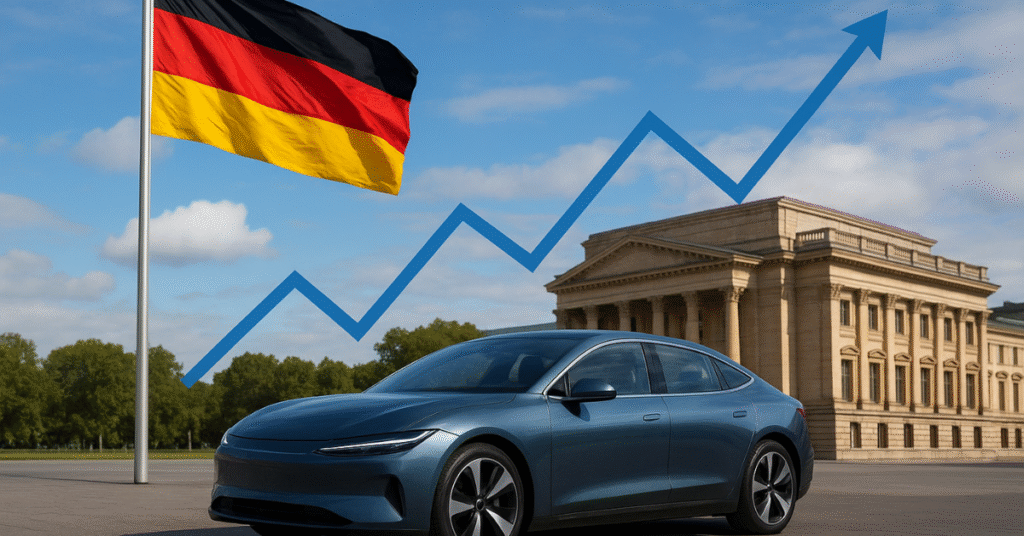
Germany’s success in automotive innovation comes from early inventions, a strong engineering culture, close-knit supplier networks, and government-backed research. Today, these strengths are driving advances in electric vehicles, software-driven cars, and national charging plans. While China leads in production and Japan in reliability, Germany stands out for its high-quality engineering, advanced platforms, and forward-looking infrastructure policies that aim to keep it ahead in auto technology through 2030 and beyond.
Origins of a car nation
Germany’s foundational role in car history begins with Karl Benz’s Patent‑Motorwagen and the pioneering work of Nicolaus Otto, Gottlieb Daimler, and Wilhelm Maybach, which established the four‑stroke engine and practical motor car in the late 19th century.
Back in 1888, Bertha Benz took her husband’s early motorcar on a bold road trip from Mannheim to Pforzheim to visit her mother. Along the way, she solved problems with everyday items—buying fuel at a pharmacy, unclogging a line with a hat pin, and even asking a cobbler to add leather to the wooden brakes. That trip showed people the car wasn’t just a strange machine; it could work in real life. From there, German carmaking built a reputation for careful, precise engineering—clear designs, steady improvements, and technology that influenced everything from the early Mercedes 35 PS to Porsche’s later classics.”

The Strength of Germany Automotive Engineering and Innovation
When people talk about “German engineering,” they mean a strong focus on quality, durability, and performance. This reputation is built on top engineering schools and steady investment in research by carmakers and suppliers. The auto industry is Germany’s most innovative sector, leading in R&D spending and supporting a network of suppliers that help spread new technology quickly. This environment has produced key advances like ABS, quattro drivetrains, lightweight materials, and top safety systems.
Also Read:- India’s EV Dream Hinges on These 7 Rare Earth Metals—Here’s Why – lostnews
How Germany Automotive Innovation Shaped the Global Industry
- Systems integration: German OEMs excel at integrating powertrain, chassis, software, and user experience into coherent premium products, a core differentiator vs. pure cost competition.
- Platform innovation: New 800‑volt EV architectures from BMW and Mercedes deliver ultra‑fast charging and long‑range capability, signaling a regain of technological momentum in the EV era.
- R&D intensity: With automotive leading national industrial R&D, Germany converts research into serial production quickly across brands and suppliers.
The Future of Germany Automotive Technology in the EV Era
After Chinese brands made big gains in electric vehicles, German carmakers responded with new platforms featuring 800-volt systems, fast charging, and long-range batteries. Models like BMW’s Neue Klasse and Mercedes’ latest EV SUVs show that German brands are now matching or beating competitors in charging speed, range, and in-car technology, while using their strong global brands. At the same time, Germany recognizes the tough competition from China and is working on partnerships, local production, and trade policies to stay competitive in Europe and beyond.
Beating China and Japan: in what sense?
- Against China: China leads in volume and cost; Germany’s competitive edge is premium tech, platform sophistication, and high-speed charging integration, areas where iX3‑class and EQ technology regain leadership signals at European shows. German brands aim to defend Europe with innovation while navigating policy debates over Chinese EV tariffs and supply chains.
- Against Japan: Japan commands consistency and hybrid leadership, but Germany differentiates with high-performance EV architectures, luxury UX, and rapid adoption of 800‑volt high-power charging as core product attributes.
How Policy and Infrastructure Strengthen Germany Automotive Growth
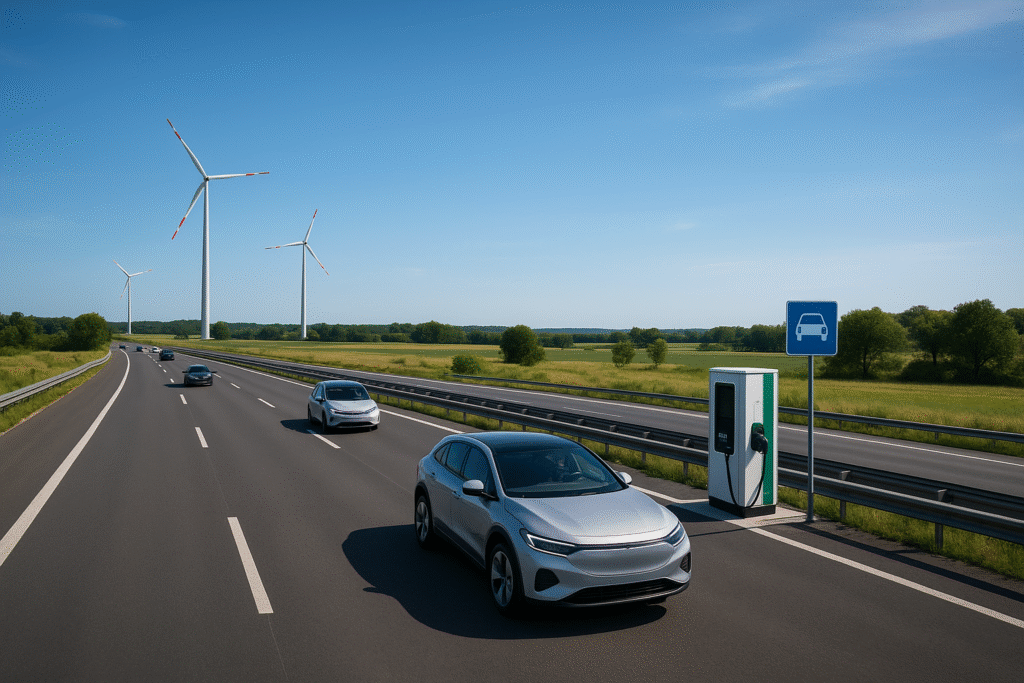
Germany’s national plan for charging infrastructure through 2030 includes about 40 steps to boost demand, speed up permits, encourage competition, improve the grid, and make charging easier for users. The goal is to move from subsidies to a market-driven approach. The plan aims for charging access everywhere—from apartments and workplaces to accessible stations and truck routes—so that energy and transport policies work together to make EV adoption easier across the country. These efforts build on earlier goals to put millions of EVs on German roads by 2030 and expand charging for a large-scale shift.
The role of heritage in modern innovation
German museums and brand archives reflect a continuous thread from carburetors and the Mercedes 35 PS to 1970s electric concepts like BMW’s 1602e and today’s AI‑assisted driving features, illustrating a culture of incremental breakthroughs tied to design philosophy. This heritage builds trust that enables German OEMs to sell high‑tech vehicles at premium price points, funding the next wave of software and power electronics investments.
Germany Automotive Ecosystem: From Suppliers to Smart Systems
Germany’s strengths now include embedded systems and suppliers who have moved from mechanical skills to electronics, sensors, and software. This shift speeds up the move to software-driven vehicles. Close supplier networks help turn research into products faster, allowing Germany to deliver advanced features like driver assistance while keeping high quality standards.
Global market positioning in 2025
Germany produces fewer cars than China, the U.S., and Japan, but focuses on high-end models and global brands like Volkswagen, BMW, and Mercedes, which have a big impact and strong profits. Trade issues and events like IAA Mobility highlight the competition between Europe and China, but German brands are showing new leadership in charging technology, platforms, and premium user experience.
Also Read:- Wi-Fi Wonders: How a Simple Signal Revolutionised the Way We Live.. – lostnews
Challenges and Opportunities Ahead for Germany Automotive Industry
- Chinese competition: Rapid EV iteration and cost advantages from China pressure German market share in Europe; responses include tech differentiation, policy coordination, and supply‑chain resilience.
- Infrastructure gaps: Industry groups urge faster planning and grid integration to match EV adoption, aligning with the master plan’s focus on permitting and digitized grid access.
- Digital race: Continued investment in embedded tech and software is essential to sustain leadership in the software-defined vehicle era.
What’s next: 2025–2030
Germany’s Charging Infrastructure Master Plan 2030 aims to provide reliable, accessible, and smart charging across the country, including routes for heavy trucks, to support a full shift to electric vehicles and keep its industry strong. Car companies are launching 800-volt platforms, faster-charging batteries, and advanced digital interiors, while working with policymakers to respond to Chinese EV growth and strengthen manufacturing at home. Thanks to its history, strong research, and coordinated policies, Germany is ready to lead in technology and user experience, setting the standard for premium electric vehicles.






1 thought on “Unstoppable Momentum: How Germany Automotive Innovation Is Leading the tech and EV Race”