
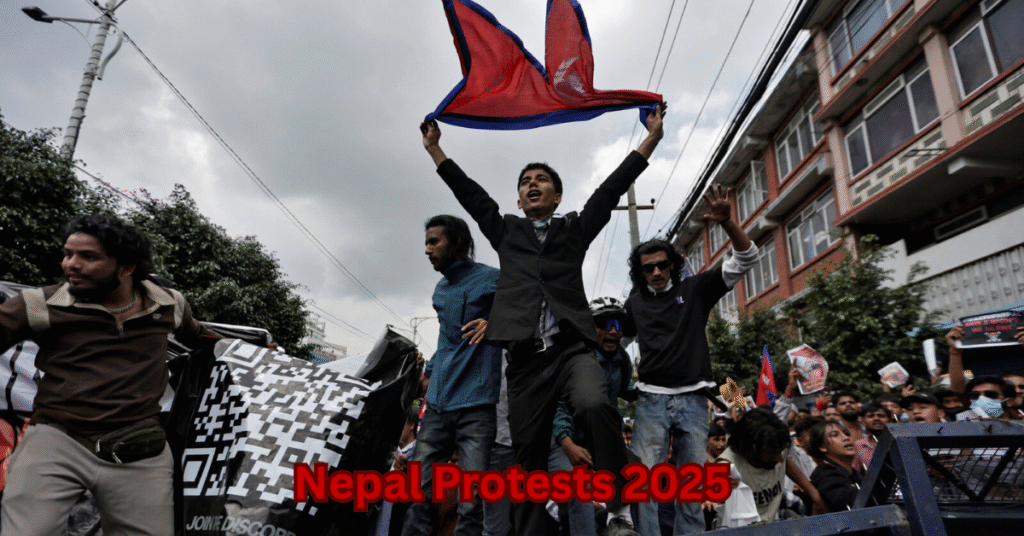
Nepal’s protests were led by young people angry about corruption, favoritism, and a sudden social media ban. The protests turned deadly very quickly, which pushed Prime Minister K.P. Sharma Oli to resign and led the army to impose a curfew in Kathmandu. Currently, troops are guarding key locations, curfews remain in effect, and leaders are discussing an interim setup as the public demands real accountability and reform.
Why did the Nepal protests start
- The immediate trigger was a government ban on 20+ social media platforms (including WhatsApp and Instagram) for “non-registration,” widely perceived as an attempt to stifle an online anti-corruption movement; the ban was later rescinded after lethal clashes, but it catalyzed anger already brewing among youth over corruption and economic stagnation.
- Under the hashtag-driven “Gen Z” banner, young Nepalis highlighted the ostentatious lifestyles of political elites’ children—labeled “Nepo kids”—framing the protests as a pushback against entrenched nepotism and inequality in a country where many youths face unemployment and limited opportunity.
- Beyond censorship and elite excess, protesters cited long-term grievances, including frequent government turnover since 2008, weak governance, and a lack of credible anti-corruption accountability, which transformed an online movement into a nationwide street uprising.
What politicians did
- Prime Minister K.P. Sharma Oli resigned after two days of violence and mounting deaths, saying the crisis had grown beyond his government’s control. Other senior officials, including the home minister, also resigned as public anger rose over the violence and corruption allegations.
- The government first imposed, then lifted, the social media ban as clashes intensified, but the reversal came too late to stem anger; curfews and emergency measures were announced as fires and attacks hit parliament and top leaders’ residences.
- Protest representatives indicated support for a former Supreme Court chief justice to lead an interim government. However, the path is uncertain, and Gen Z organizers remain wary of any solution that recycles current parliamentary elites.
Also Read: Conflict on the Thailand–Cambodia Border – lostnews
Role of the Opposition
The opposition seized the moment to attack the government’s failures.
- Opposition leader Sher Bahadur Deuba and others condemned the social media ban as unconstitutional and blamed Oli’s administration for the deaths during clashes.
- Opposition parties supported calls for an interim government but stressed that it must not be dominated by the same elites who had lost public trust.
- They also demanded an independent investigation into the killings and promised to back reforms that strengthen accountability and protect digital freedoms.
What the police and army During Nepal protest
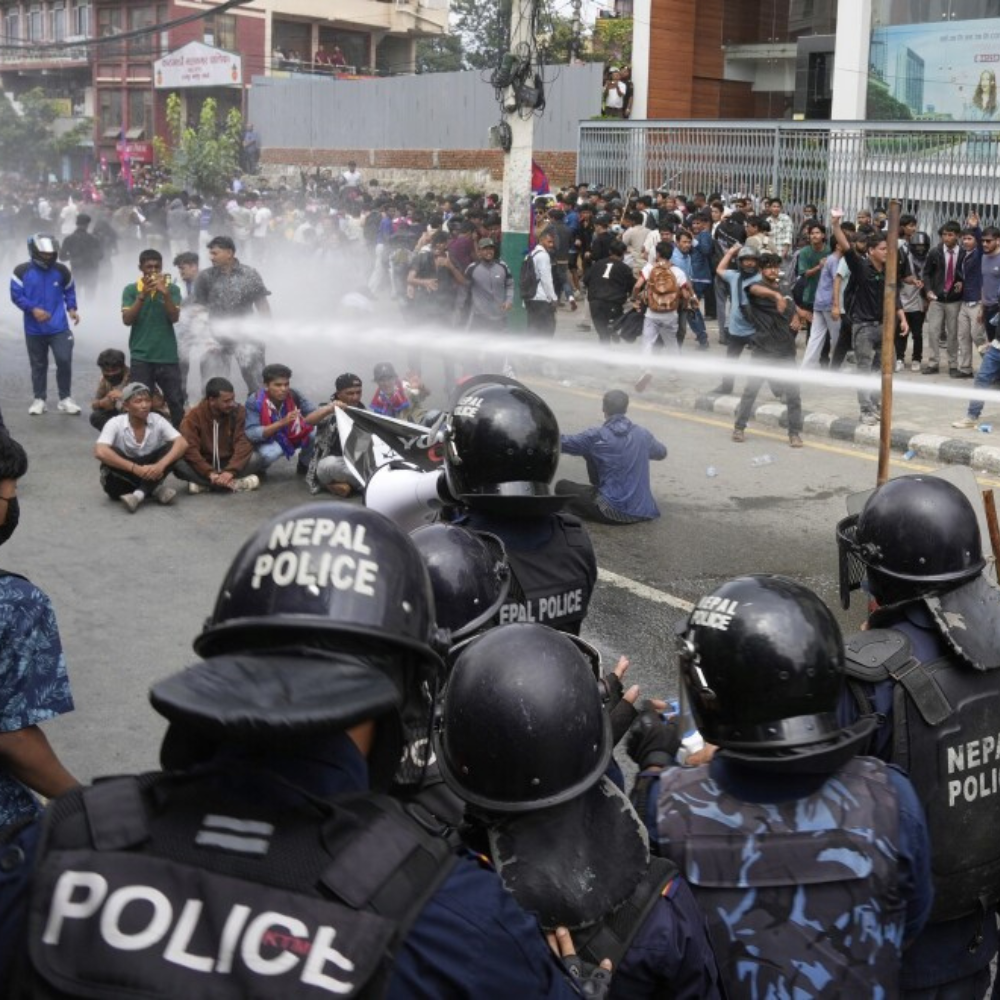
- Police used tear gas, water cannons, rubber bullets, and, in some cases, live rounds when crowds tried to push into parliament and other government sites. Reports say at least 22 to about 30 people were killed, and hundreds were injured..
- After the worst violence—including arson at the parliament, Supreme Court, and ministries—the army deployed, enforced citywide curfews, set up checkpoints, and publicly warned against looting and vandalism while inviting peaceful dialogue with youth leaders.
- With Kathmandu’s airport briefly closed and later reopened, the armed forces now guard strategic buildings and coordinate with civilian authorities to stabilize the capital while detaining alleged rioters and confiscating weapons.
How Police and Army Responded
- In the beginning, huge crowds of young people gathered peacefully, even staying out after curfews once news of deaths spread. They chanted for accountability, fair rules, and real change. The movement kept stressing respect for ordinary citizens and a future free from corruption.
- As violence escalated, some groups engaged in arson and vandalism targeting symbols of state power and political privilege; Gen Z organizers publicly distanced themselves from these acts, claiming the demonstrations were “hijacked” by opportunists.
- Community groups emerged to clear debris and aid the injured. At the same time, international voices, including the UN, urged restraint, adherence to human rights, and an impartial investigation into the deaths and excessive force allegations.
Reasons fueling the nepal protest
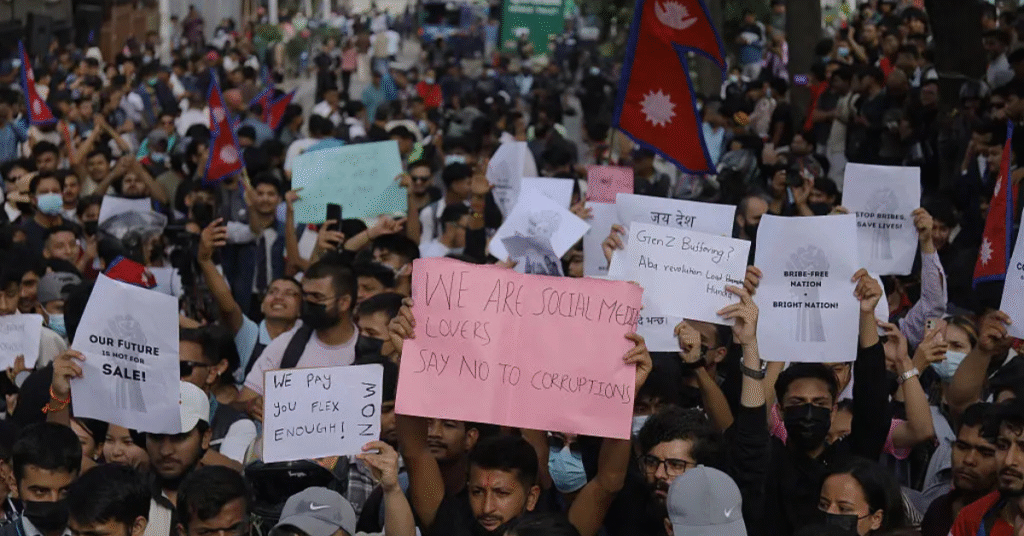
- Censorship and control: The social media ban was seen as an affront to free expression and a tactic to undercut digital mobilization against corruption, energizing a generation raised online to coordinate civic action.
- Corruption and nepotism: Perceived impunity among political elites and the conspicuous consumption of “Nepo kids” crystallized public frustration over inequality and lack of fair opportunity.
- Economic anxiety and instability: Years of political churn since 2008, thin job prospects, and uneven governance fed a sense that the system wasn’t delivering for ordinary people, especially the young.
Current situation
- Security: Soldiers are guarding the parliament and other key buildings under a strict curfew. Kathmandu is quieter but still tense, with checkpoints and patrols to stop any new arson or looting.
- Politics: After the prime minister resigned, talks are focusing on a neutral interim leader, possibly a former chief justice. Nothing is final yet, and protesters keep asking for credible change and accountability.
- Human impact: Reports put the death toll roughly between 22 and 30, with many more injured. The main international airport has reopened, and curfew and other restrictions are still in place while investigations and negotiations continue.
Also Read: How the Russia-Ukraine War Is (Surprisingly) Benefiting Other Countries – lostnews
Timeline of Events
- Day 1: The government blocked more than 20 social media apps. Youth-led rallies grew quickly, and the first clashes and injuries drew national attention.
- Day 2: Protesters set fire to the Parliament, Supreme Court, and some ministries. Homes of politicians were attacked, the airport shut briefly, and Prime Minister K.P. Sharma Oli resigned.
- Day 3: The army took to the streets and imposed a curfew. The death toll rose, the airport reopened, and early talks began on forming an interim leadership.
Conclusion
- The protests began with a clear anti-corruption push, then evolved into a larger fight against censorship, favoritism, and unfair economics. The prime minister’s resignation is a big moment, but it isn’t the finish line.
- Lasting peace will likely need a trusted interim setup, open probes into the deaths, and real steps to check graft and elite privilege—not crackdowns or token fixes.
- For Gen Z, success means solid systems: independent watchdogs, digital freedoms, and real opportunity—not just symbolic promises. What leaders do next will decide if this becomes a democratic renewal or another missed chance.



3 thoughts on “Nepal Protests 2025: Why Gen Z Took to the Streets Against Corruption and Censorship”