
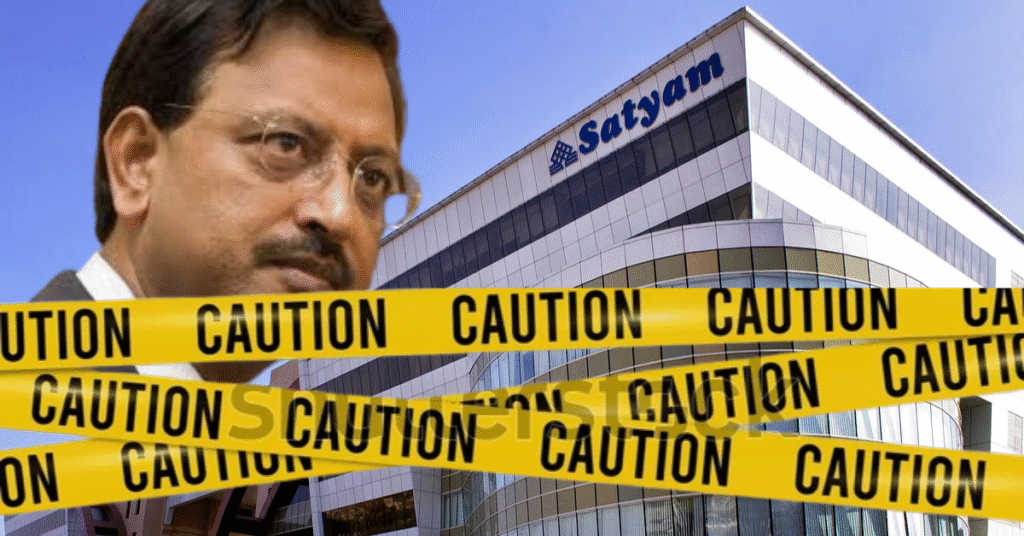
There was a time when Satyam Computer Services was seen as one of India’s most trusted tech companies. Founded in 1987 by Ramalinga Raju, the company grew rapidly and became a key player in India’s IT revolution. It worked with global clients, hired thousands of employees, and was listed on stock exchanges in India and abroad. To the outside world, Satyam looked like a success story — a company built on innovation, discipline, and professionalism.
But behind those glowing numbers and awards, something much darker was happening. Years later, the truth would explode into headlines as the Satyam Computer Scam, one of the biggest accounting frauds in India’s corporate history.
How the Satyam Computer Scam Began
The roots of the Satyam Computer Scam began long before the world knew anything was wrong. As competition in the IT industry increased, the company began inflating financial statements to appear bigger and more successful than it actually was.
Instead of accepting slower growth, Ramalinga Raju and his close circle allegedly created fake invoices, manipulated bank statements, forged balance sheets, and showed income that simply did not exist. Over time, the lies piled up — but so did investor confidence and stock value.
On paper, Satyam looked healthy, wealthy, and unstoppable. But in reality, the company was sinking under fraud.
How Big Was the Scam?
By the time the truth was revealed, the forged numbers were staggering:
- ₹7,136 crore of profits were fake
- ₹5,040 crore of reported cash never existed
- Thousands of fake employee records were created
- Counterfeit invoices were issued to show false revenue
The scam wasn’t a one-time manipulation — it continued quietly for nearly a decade, making it one of the longest-running corporate frauds in India.
Also Read: – Nirav Modi–PNB Scam (2018): How One Fraud Shook India’s Banking System – lostnews
Who Was Involved?
The main accused in the Satyam computer scam was:
- B. Ramalinga Raju — Founder and Chairman
Others named in the case included:
- Rama Raju — Ramalinga Raju’s brother and Managing Director
- Vadlamani Srinivas — Chief Financial Officer
- PricewaterhouseCoopers (PwC) auditors
- Key internal employees who forged financial records
What shocked many was that trusted auditors and experienced financial experts failed to catch (or allegedly ignored) the fraud.
The Day the Truth Came Out
On 7 January 2009, Ramalinga Raju sent a letter to Satyam’s Board of Directors. The letter changed everything.
In it, he confessed to years of financial fraud, inflated earnings, and fake cash balances. He admitted the company had been living on numbers that weren’t real. One line from the confession became famous:
“It was like riding a tiger, not knowing how to get off without being eaten.”
The stock market reacted instantly. Satyam’s share price crashed by nearly 80% in a single day, wiping out billions in investor wealth.
Employees panicked, clients backed out, and the Indian IT industry faced a reputational crisis.
Government and Legal Action
After the confession, the government moved quickly:
- The CBI, SEBI, and SFIO launched investigations.
- The existing board was dissolved.
- New independent board members were appointed to stabilize the company.
In 2015, after years of trial, a special CBI court convicted:
- Ramalinga Raju
- His brother Rama Raju
- CFO Vadlamani Srinivas
- Two PwC auditors
- And several others
They were found guilty of:
- Cheating
- Forgery
- Falsifying evidence
- Criminal breach of trust
What Happened to Satyam After the Scam?
To protect employees and prevent total collapse, the Indian government looked for a buyer. In April 2009, Tech Mahindra acquired the company.
Satyam was renamed Mahindra Satyam and eventually merged with Tech Mahindra in 2013, effectively ending the brand.
Today, Tech Mahindra still carries the legacy — but the Satyam chapter remains one of the darkest lessons in India’s business history.
Why Did the Scam Happen?
Investigators later concluded the fraud was driven by:
- Pressure to maintain growth
- Fear of losing investor trust
- Personal greed
- Lack of strict oversight and auditing transparency
The scam showed how corporate governance can fail when power is concentrated in the hands of a few.
Also Read: – 2G Spectrum Scam (2008): How One of India’s Biggest Telecom Scandals Unfolded – lostnews
Impact of the Satyam Computer Scam
The fallout was massive:
- Investors lost billions
- Corporate auditing laws were strengthened
- Regulatory bodies tightened compliance rules
- India introduced stricter financial reporting standards
The scam became a case study in business schools around the world — a reminder that success built on lies eventually collapses.
Final Thoughts
The Satyam Computer Scam wasn’t just about fake numbers — it was about broken trust. A company that once represented India’s tech ambitions became a global example of corporate fraud. Even today, the story remains a warning: transparency, ethics, and accountability matter more than glamorous growth and market valuation.
In the end, Satyam stands as proof that no matter how big a business becomes, a foundation built on deception eventually crumbles.






1 thought on “The Satyam Computer Scam: How India’s Biggest Corporate Fraud Unfolded”