Technology is moving faster than ever. Just a few years ago, AI felt experimental, smart homes were luxury items, and remote work was not the norm. Today, these things are part of daily life. Now imagine what the next ten years will look like.
The coming decade will not just bring “new gadgets.” It will change how we work, communicate, travel, learn, and even how cities function. Some of these technologies sound futuristic, but many are already being tested quietly in the background.
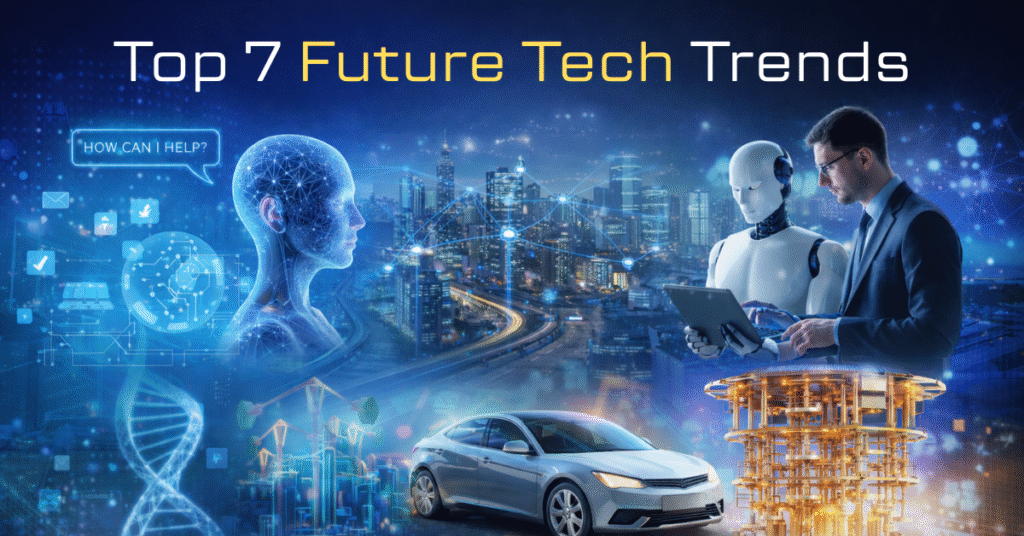
Let’s break down the top 7 future tech trends that will shape the next decade — explained in simple language without complicated jargon.
1. Web 4.0 – The Intelligent and Connected Internet
You may have heard of Web 1.0 (basic websites), Web 2.0 (social media and interaction), and Web 3.0 (decentralisation and blockchain). Now comes Web 4.0 — often described as the “symbiotic web.”
But what does that actually mean?
Web 4.0 will be:
- Smarter
- More personalised
- Deeply connected to real life
Instead of you searching the internet, the internet will understand what you need before you even ask.
For example:
- Your devices may automatically suggest health advice based on wearable data.
- Your car could sync with traffic systems to choose the safest and fastest route.
- Your digital assistant might handle bookings, payments, and reminders without constant instructions.
Web 4.0 is about real-time interaction between humans and machines. It’s not just browsing — it’s intelligent collaboration.
2. AI Personal Assistants That Actually Think Ahead
Today’s voice assistants can set alarms and play music. In the next decade, AI assistants will become far more advanced.
Imagine an assistant that:
- Manages your calendar
- Handles emails
- Negotiates service prices
- Tracks your health habits
- Suggests investment options
- Learns your preferences over time
Future AI assistants won’t just respond — they’ll anticipate.
They may:
- Warn you about burnout based on your work pattern.
- Suggest a career course based on industry trends.
- Automatically reorder groceries when supplies are low.
This shift will save time and reduce mental overload. Instead of juggling tasks, people will rely on intelligent systems to handle routine decisions.
3. Smart Cities That Improve Daily Life
Urban areas are growing fast. Managing traffic, pollution, water, and waste is becoming more complex. This is where smart cities come in.
Smart cities use sensors, data, and AI to make urban life smoother.
Examples include:
- Traffic lights that adjust automatically to congestion
- Smart bins that alert authorities when full
- Public transport that runs based on real-time demand
- Streetlights that save energy by dimming when no one is around
In the future, smart cities may also:
- Monitor air quality continuously.
- Detect infrastructure damage early.
- Improve emergency response times.
The goal is simple: make cities safer, cleaner, and more efficient.
4. Extended Reality (XR): Blending Physical and Digital Worlds
Virtual Reality (VR) and Augmented Reality (AR) are already growing. But the next decade will push this further into Extended Reality (XR) — a mix of digital and physical experiences.
What could this look like?
- Students attending virtual classrooms that feel real.
- Doctors practice complex surgeries in simulation before performing them in real procedures.
- Remote workers collaborating in 3D digital offices.
- Shoppers try on clothes virtually before buying.
Instead of staring at screens, people may interact with digital environments around them.
XR could completely change:
- Education
- Gaming
- Healthcare
- Retail
- Workplace collaboration
It’s about immersion — not just viewing.
Also Read: – The Most Exciting Tech Innovations of 2025 That Are Changing the World Faster Than Expected – lostnews
5. Quantum Computing – Solving the Impossible
Traditional computers process data in bits (0 or 1). Quantum computers use “qubits,” allowing them to process information in a completely different way.
While this sounds technical, here’s the simple version:
Quantum computers can solve problems that would take normal computers thousands of years.
Potential impacts include:
- Faster drug discovery
- Advanced climate modeling
- Improved cybersecurity systems
- Smarter logistics planning
We won’t all own quantum computers at home. But industries like medicine, finance, and research will benefit massively from them.
The next decade may bring breakthroughs we once thought were impossible.
6. Autonomous Transportation and Electric Mobility
Self-driving cars are still being tested, but the progress is steady. In the next ten years, autonomous vehicles may become more common.
This includes:
- Self-driving taxis
- Autonomous delivery vehicles
- Smart public transport systems
Electric vehicles (EVs) will also expand rapidly. Charging stations will become more accessible, and battery technology will improve.
Future transportation may focus on:
- Reducing traffic accidents
- Lowering pollution
- Improving fuel efficiency
- Saving commuting time
Some cities may even introduce flying taxis or advanced drone systems for logistics.
Mobility will become smarter, cleaner, and more automated.
7. Biotechnology and Personalised Healthcare
Healthcare will become more personalised thanks to technology.
Future trends may include:
- Wearable devices that detect illness early
- DNA-based treatment plans
- AI-driven diagnostics
- Remote robotic surgeries
Instead of one-size-fits-all treatment, doctors may tailor care specifically to your genetic profile.
Health monitoring could become continuous rather than occasional. Devices may track vital signs daily and alert professionals before a serious issue develops.
This proactive approach could:
- Increase life expectancy
- Reduce healthcare costs
- Improve overall quality of life.
How These Trends Will Affect Everyday People
You don’t need to be a tech expert to feel the impact of these changes.
Here’s how daily life might shift:
- Work will become more remote and tech-driven.
- Learning will become immersive and global.
- Healthcare will become preventive instead of reactive.
- Cities will become smarter and more efficient.
- Personal productivity will improve with AI assistance.
Technology will not just sit in our pockets. It will surround us — invisibly and intelligently.
Will These Changes Replace Jobs?
This is a common concern.
Yes, automation will replace some repetitive jobs. But it will also create new roles in:
- AI development
- Data analysis
- Cybersecurity
- Smart infrastructure
- Renewable energy
History shows that technology transforms work — it doesn’t eliminate it.
The key will be adaptability. Skills like creativity, emotional intelligence, and problem-solving will remain valuable.
Also Read: – AI Tools That Are Revolutionizing Small Businesses in 2025 – lostnews
Final Thoughts: The Future Is Closer Than We Think
The next decade will not feel like science fiction — it will feel natural.
Many of these technologies are already being tested quietly. What seems advanced today will become normal tomorrow.
The most important thing is not to fear change, but to understand it.
The future of technology is not just about machines. It’s about making life:
- Smarter
- Safer
- Healthier
- More connected
And while we may not fully control where innovation goes, we can prepare ourselves by staying informed and adaptable.
The next ten years will shape how we live for generations.
And the transformation has already begun.