
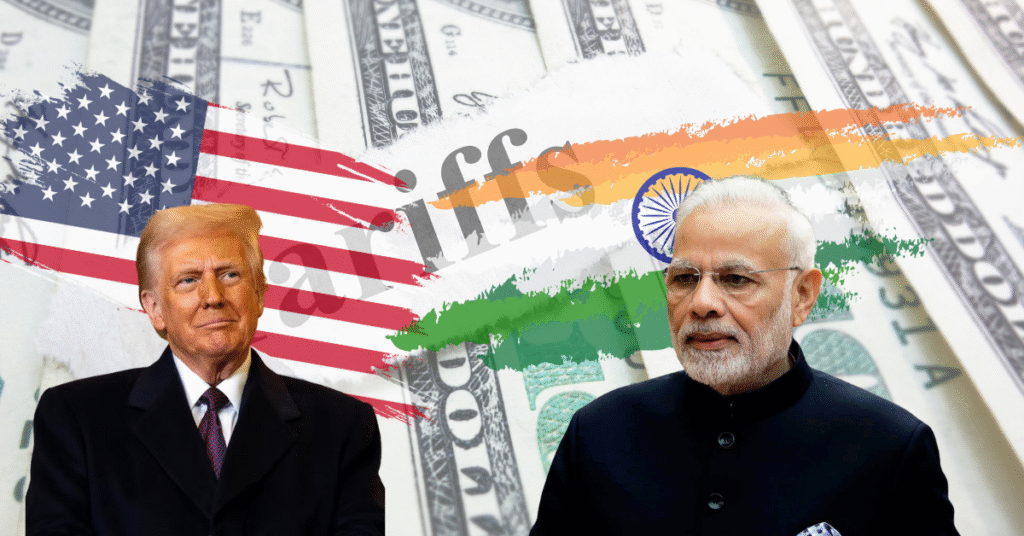
You might already know that the U.S. has significantly increased tariffs on imports from India. This change is causing a lot of concern among business leaders, exporters, and policymakers. On August 6, 2025, President Donald Trump announced that the U.S. would raise tariffs on many goods coming from India to 50%. Which means the U.S. will charge much higher taxes on products imported from India — the highest rates the country has ever set for any trading partner.
What does this mean? How will it affect India’s economy and its trade with the U.S.? And why should it matter to you?
What Are These Tariffs and Why Did the U.S. Increase Them?
Tariffs are taxes put on imported products. Think of them as extra charges companies must pay when shipping goods from one country to another. Recently, the U.S. targeted Indian imports with these additional fees mainly because of India’s ongoing purchases of Russian oil and broader geopolitical tensions involving the Russia-Ukraine war.
By slapping on these tariffs, the U.S. aims to “protect” its own industries and send a message about its trade priorities. For India, this means that goods sold to the U.S. will suddenly become more expensive for American buyers, especially products like textiles, gems, leather goods, and car parts.
How Big Is the Trade Between the U.S. and India?
India and the U.S. have developed a strong trade relationship over the years, with their annual trade reaching around $190 billion in 2024. Some of India’s most important exports to the U.S. include
- Pharmaceuticals ($8.1 billion)
- Telecom equipment ($6.5 billion)
- Precious stones and jewelry ($5.3 billion)
Despite this healthy trade, the U.S. runs a significant trade deficit with India — buying more from India than it sells. The tariffs could shake things up in that balance.
What Products Are Most Affected by These Tariffs?
Here are the new tariff rates on Indian goods before and after August 27, 2025. Most products will see an increase from 25% to 50%, with key exceptions for specific sectors like pharmaceuticals and electronics.
| Product Category | Tariff Rate Before Aug 27 | Tariff Rate After Aug 27 |
| Textiles & Apparel | 25% | 50% |
| Gems & Jewelry | 25% | 50% |
| Leather & Footwear | 25% (around 20.8–29.5% for footwear) | 50% (around 45.8–54.5% for footwear) |
| Marine Products | Approximately 33.26% (includes anti-dumping and countervailing duties) | Approximately 58.26% (including extra duties) |
| Chemicals (Organic) | 25% | 50% |
| Automobiles & Auto Parts | 25% | 50% |
| Iron, Steel, Aluminum | 25% (5–12.5% for industrial goods) | 50% (30–37.5% for industrial goods) |
| Agricultural Products | Around 25% (e.g., onions 25.54%) | Around 50% (e.g., onions 50.54%) |
| Machinery & Engineering Goods | 25% | 50% |
| Ceramic, Glass, Stone | 25% | 50% |
| Rubber Items | 25% | 50% |
| Paper & Wood Products | 25% | 50% |
| Furniture | 25% | 50% |
| Dairy Products | 56.46% (e.g., buttermilk) and 30.84% (milk powder) | 81.46% and 55.84% respectively |
| Pharmaceuticals | 0% (exempted) | 0% (still exempted) |
| Electronics & Semiconductors | 0% (exempted) | 0% (still exempted) |
| Energy Products | 0% (exempted) | 0% (still exempted) |
| Critical Minerals | 0% (exempted) | 0% (still exempted) |
This steep hike means many Indian businesses, especially small and medium enterprises in sectors like textiles and leather, could face tough competition abroad.
Economic Ripples in India: What’s the Impact?
With approximately $87 billion of Indian exports going to the U.S. annually, these tariff increases risk slowing down India’s growth. Experts worry this could reduce India’s GDP growth by up to half a percentage point in the near term. Industries like engineering exports alone might lose billions due to suppressed demand.
Moreover, smaller businesses that heavily rely on U.S. buyers may find it even harder to compete with countries like Vietnam or Bangladesh, which are subject to lower tariffs. Currency fluctuations are adding to the stress, making imports costlier and increasing the cost of foreign loans for some Indian companies.
How Is India Responding?
India has called the tariffs “unfair” and stressed that it has the right to make its own decisions on energy and trade. Rather than hitting back right away, the government is choosing a more balanced approach.
- Diplomatic talks: India is working closely with the U.S. to find common ground, hoping to negotiate better terms by the end of 2025.
- Support for affected businesses: Measures such as interest subsidies and loan guarantees for small and medium enterprises are on the table to help them cope.
- Diversifying markets: Industry leaders encourage exploring alternative markets to reduce heavy dependence on the U.S.
- Promoting ‘Make in India’: Strengthening local manufacturing to cushion industry shocks caused by these tariffs.
What Lies Ahead?
There was a brief grace period before the full tariffs took effect, signaling that both countries want to keep talks open. If talks go well, the U.S. could lower tariffs to around 15–20%. But some issues, like agriculture, are still hard to settle.
India might respond by adding its own tariffs to protect local businesses and by trading more with other countries to reduce its reliance on the U.S.
Final Thoughts:
The 50% tariffs imposed by the U.S. present a significant challenge to U.S.-India trade, especially impacting industries such as textiles, jewelry, and small businesses. Still, India is handling the situation by using diplomacy, helping affected industries, and making smart changes to its trade plans. For Indian exporters and business owners, the most innovative way forward is to stay flexible, watch market trends closely, and make well-informed choices to get through these uncertain times.
Trade tensions like this remind us how interconnected and sensitive global economies are — and why staying adaptable is more important than ever.





2 thoughts on “Explained: U.S. 50% Tariffs on Indian Exports and What It Means for You”