
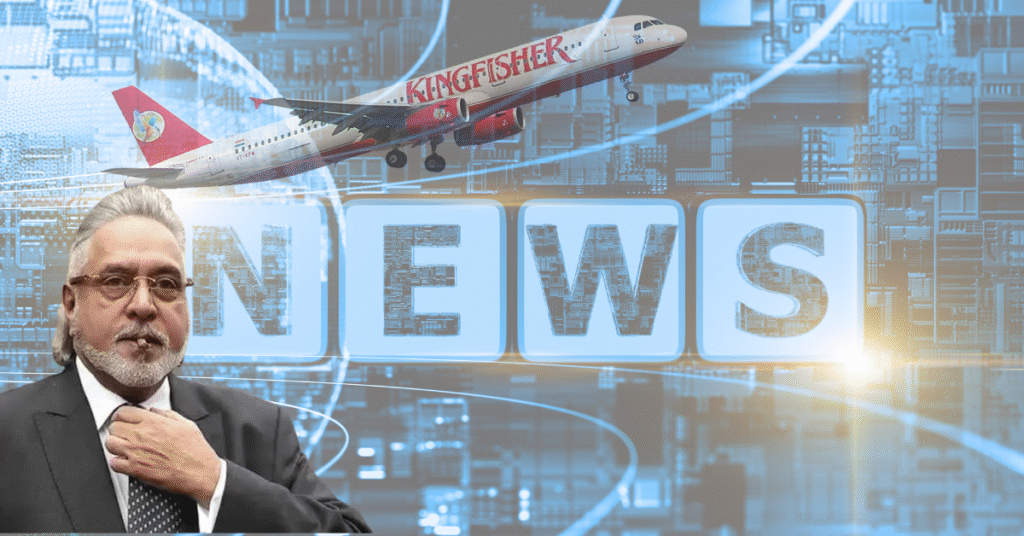
Introduction — The Rise Before the Fall
For many years, Vijay Mallya was known as the “King of Good Times.” He owned Kingfisher Airlines, the popular Kingfisher beer brand, a Formula 1 team, a cricket franchise, and multiple luxury properties across India and abroad. His image was that of a flamboyant billionaire who lived life king-size.
But behind the glamour and extravagance was a financial storm slowly building — one that would later become one of India’s biggest loan frauds.
This scandal, often called the Kingfisher Bank Loan Scam, involved unpaid loans of over ₹9,000 crore, dozens of banks, weak oversight, and a series of decisions that spiraled out of control.
This is the detailed story — from the creation of Kingfisher Airlines to Vijay Mallya’s flight from India, the investigations, the people involved, and what happened afterward.
How Kingfisher Airlines Was Born
In 2005, Vijay Mallya launched Kingfisher Airlines, aiming to create India’s most luxurious and premium airline. The idea was ambitious — to offer high-end services like in-flight entertainment, gourmet meals, and a glamorous brand presence.
Why the Airline Started Facing Losses
Several problems quickly emerged:
- High operational costs
- Rising fuel prices
- Heavy spending on branding and luxury services
- A risky business decision to buy Air Deccan in 2007
- Poor financial planning and rapid expansion
The acquisition of Air Deccan, a low-cost carrier, was especially damaging. Kingfisher took on its liabilities and merged two completely different business models, worsening the financial situation.
The Beginning of the Loan Crisis
By 2009, Kingfisher Airlines was drowning in debt. To keep the company alive, Vijay Mallya began approaching multiple banks for loans.
Major Banks That Lend Money
Kingfisher eventually took loans from:
- State Bank of India (SBI)
- Punjab National Bank (PNB)
- IDBI Bank
- Bank of Baroda
- United Bank of India
- UCO Bank
- Indian Overseas Bank
- Federal Bank
- Axis Bank
In total, 17 banks extended loans or credit facilities.
Also Read: – Coal Allocation Scam (Coalgate, 2012): The Full Story Behind India’s Famous Mining Controversy – lostnews
How the Scam Happened
The scandal wasn’t about just taking loans — it was about misuse, diversion of funds, and false guarantees. Here’s what investigations later found:
1. Loans were taken despite extremely poor financial health
Kingfisher Airlines had:
- continuous losses
- negative net worth
- unpaid salaries
- grounded aircraft
But banks still extended more loans — some even classified Kingfisher as “high-risk.”
2. Overvaluation of collateral
To get loans, Mallya offered:
- Kingfisher brand value
- office furniture
- personal guarantees
The “brand value” of Kingfisher — once valued at ₹4,000 crore — was a major concern. It was intangible, overvalued, and practically worth nothing once the airline collapsed.
3. Diversion of bank loans
The Central Bureau of Investigation (CBI) later reported that:
- A portion of the loan money was sent abroad
- Payments were made to shell companies
- Money was spent on purposes not approved by the banks
4. Not paying employees
Even when the airline received fresh loans, thousands of employees remained unpaid for months.
5. No intent to repay
This was the most serious allegation.
Investigators believed that Mallya never intended to repay the loans once the airline began to collapse.
The Biggest Turning Point — IDBI Bank’s ₹900 Crore Loan
In 2009, IDBI Bank sanctioned a loan of ₹900 crore to Kingfisher Airlines.
Later investigations revealed:
- The bank ignored warning signs
- Internal officials who objected were overruled
- The loan was disbursed within a few days
- A large part of the loan was diverted
Main Accused in IDBI Loan Case
The CBI listed the following people:
- Vijay Mallya (Kingfisher Airlines chairman)
- A. Raghunathan (CFO of Kingfisher Airlines)
- B.K. Batra (former IDBI Bank Deputy Managing Director)
- O.P. Srivastava (IDBI Bank GM)
- S.B. Ashok (IDBI Bank AGM)
Several Kingfisher staff and unknown public servants were also under scrutiny.
2012 — Kingfisher Airlines Collapses
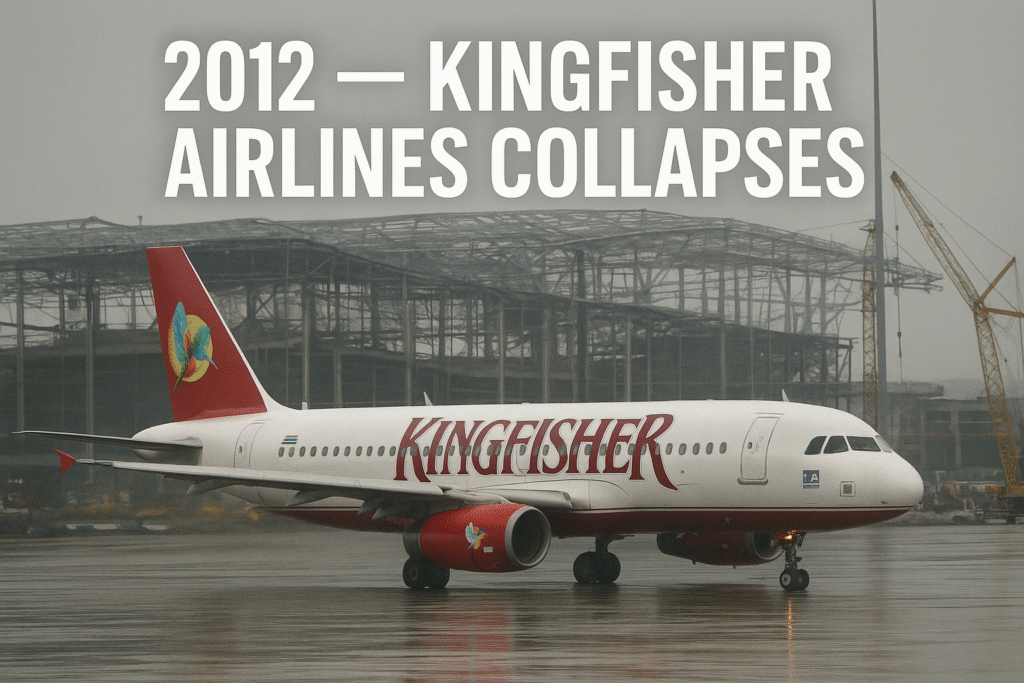
By 2012:
- Flights were cancelled
- Aircraft were grounded
- Fuel companies stopped supplying fuel
- Airports refused to handle Kingfisher flights due to unpaid dues
That year, Kingfisher Airlines’ license was officially suspended.
The debt remained unpaid, and banks classified the account as NPA (Non-Performing Asset).
Vijay Mallya Leaves India (March 2, 2016)
As pressure mounted from banks, the CBI, and the courts, Vijay Mallya quietly left India on March 2, 2016, using his diplomatic passport.
Banks alleged that:
- He left “deliberately,” knowing legal action was coming
- He owed over ₹9,000 crore
- He refused to return for questioning
Mallya claimed he left legally and wasn’t fleeing — but the timing raised strong suspicion.
India’s Legal Battle to Bring Him Back
After Mallya left India, several legal actions began:
1. CBI Case
CBI filed cases for:
- criminal conspiracy
- cheating
- fraud
- abuse of official position
- diversion of funds
CBI also registered cases against bank officials who approved risky loans.
2. ED (Enforcement Directorate)
ED launched a money laundering investigation under the PMLA Act.
ED accused Mallya of:
- siphoning off around ₹430 crore
- sending money abroad under fake “aircraft lease payments”
- transferring funds to foreign accounts and companies
3. Banks Move the Courts
The SBI-led consortium approached:
- Debt Recovery Tribunal (DRT)
- Supreme Court of India
- UK Courts
In 2017, a UK court described Mallya’s behaviour as “wrongful and deliberate”.
4. Extradition Case in the UK
India formally requested Mallya’s extradition.
Important steps:
- 2017: UK court begins hearing
- 2018: UK court rules in India’s favour
- 2020: All appeals by Mallya rejected
However, he still remains in the UK due to a pending “confidential legal issue.”
Who Was Responsible for the Scam?
Primary Accused
- Vijay Mallya (Kingfisher Airlines chairman)
- A. Raghunathan (CFO, Kingfisher Airlines)
Bank Officials (IDBI Loan Scam)
- B.K. Batra (Deputy MD, IDBI Bank)
- O.P. Srivastava (GM, IDBI)
- S.B. Ashok (AGM, IDBI)
Other Entities Under Scrutiny
- Kingfisher Airlines board members
- Audit firms that failed to flag risks
- Mediators and consultants
Also Read: – Top 11 Biggest Scams That Shocked India: A Look at How Billions Were Lost – lostnews
Recovery Efforts — How Much Money Has Been Recovered?
India has recovered money through:
- Selling Mallya’s properties
- Liquidating his shares in UB Group
- Banks seizing assets
- ED attaching assets worth over ₹14,000 crore
In 2021, ED transferred ₹9,371 crore back to public sector banks.
But not all the amount has been fully recovered yet.
Why This Scam Shocked India
The Vijay Mallya – Kingfisher case stands out because:
- It involved a celebrity businessman
- State-run banks lent huge sums despite knowing the risks
- There was negligence and possible corruption among bank officials
- It exposed how public money can be misused under the guise of business loans
- It showed flaws in India’s banking and regulatory systems
Current Status (2024–25)
- Vijay Mallya remains in the UK
- India continues to push for his extradition
- Many properties have been auctioned
- Investigations against bank officials continue
- Kingfisher Airlines remains shut permanently
Conclusion — A Lesson for India’s Banking System
The Vijay Mallya & Kingfisher Bank Loan Scam is not just the story of one businessman. It exposed major loopholes in India’s banking practices, lending rules, and political-business connections.
This case taught India:
- Banks must follow strict due diligence
- Personal guarantees should not replace financial fundamentals
- Intentionally defaulting on loans is a crime, not a “business failure”
- Public money must be protected at every cost






1 thought on “Vijay Mallya & the Kingfisher Loan Scam: The Complete Story of India’s Biggest Bank Fraud Case”