Introduction
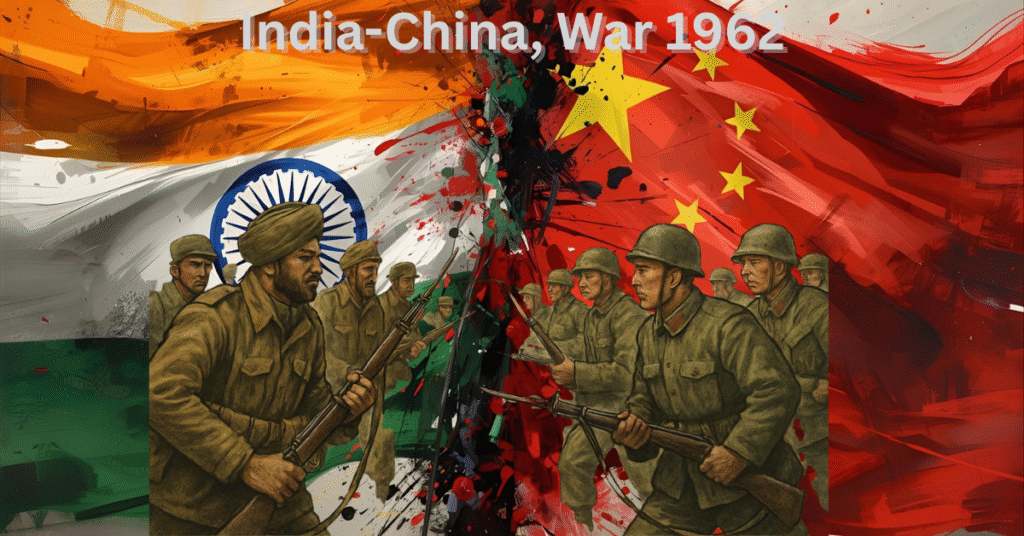
In the years following their independence, India and China enjoyed a period of sincere friendship. They signed the Panchsheel Agreement, exchanged diplomatic missions, and frequently spoke of cooperation—a partnership founded on shared dreams of progress and equality. But by 1962, the bond had frayed so deeply that it led to one of Asia’s most shocking wars. Understanding how friendship turned into conflict is not only relevant for history students, but it also helps readers grasp why border tensions between these countries persist today.
Early Friendship and Shared Dreams
India and China both emerged from long periods of foreign rule. The new leaders, Jawaharlal Nehru and Mao Zedong, were eager to shape their nations along modern and peaceful lines. For several years, both countries promoted the principles of “peaceful coexistence.” Indian films were screened in Chinese cinemas; Chinese delegations toured Indian cities. In those early days, the neighbors were not just friends—they were allies against colonialism and injustice.
The Fall of the Golden Bird: How Britain Took Over India – lostnews: Why Did India and China, Once Friends, Go to War in 1962?Seeds of Disagreement: The Border Issue
The main reason India and China fought was that they never agreed on the location of their border. When both countries became independent, they had old maps and an unclear agreement that didn’t clearly show where one country ended and the other began. Because of this confusion, soldiers from both sides would sometimes end up in the same places, each thinking it was their land.
Because the area has numerous rivers, mountains, and snow, soldiers from both sides often found themselves in the same places, each believing they were defending their own territory. The two main flashpoints were Aksai Chin (controlled by China but claimed by India) and the North-East Frontier Agency (now Arunachal Pradesh, controlled by India but claimed by China).
Rising Tension: Tibet and Border Patrols
The family squabble became serious when, in 1959, India gave asylum to the Dalai Lama, Tibet’s spiritual leader, after he fled from a Chinese crackdown. China viewed this as a direct challenge—a sign India might support Tibetan independence. Around the same time, both armies began “forward patrols”, sometimes coming dangerously close to each other in harsh Himalayan terrain.
The Indian government, following a “forward policy,” established new outposts in disputed areas. China responded with its own posts, often leading to encirclement and mutual suspicion. The situation resembled a chessboard, with each military positioning its pieces for maximum advantage—but without firing a shot, at least in the early stages.
How the War Started
In the autumn of 1962, global events, including the Cuban Missile Crisis, dominated the headlines. With world powers distracted, China saw an opportunity. On October 20, 1962, it launched a massive offensive in Ladakh and across the McMahon Line, catching Indian forces by surprise.
The Indian Army was not well-prepared for combat in those icy heights. Outnumbered and cut off from communication, many soldiers fell, and some units retreated into Bhutan. Fierce battles broke out—one moment, Indian defenders poured accurate mortar fire into Chinese positions; the next, Chinese troops advanced from behind, overwhelming Indian defenders.
By November, China had achieved its military objectives. Then, in an unexpected move, China announced a ceasefire and withdrew from some areas. The war was over in just a month, but the scars remain.
The Aftermath: Broken Trust and Lasting Legacy
The 1962 war isn’t just a gun fight; it has harmed more than that. It just broke the trust between two friendly countries, India and China. Afterward, India went through a tough time, feeling embarrassed and questioning its decisions. Due to this, India made significant changes in how the country appears and thinks about its army and national security, ensuring it was better prepared for the future. China believed it had strengthened its border, but neither side ever fully settled the ownership of those disputed lands, leaving the problem unresolved for years to come.
Since then, sporadic clashes and standoffs have continued. Soldiers still face off across barren mountain passes. Diplomatic talks have helped reduce some of the tension, but the close friendship India and China once shared hasn’t fully come back. People around the world watch closely whenever there’s a border dispute, remembering how friends can quickly become rivals.
Human Perspective: Why This Story Matters
As someone reflecting on this chapter of Asian history, one cannot help but feel a sense of loss. Where there was hope, suspicion took root. Today, there is a lesson for everyone: unclear boundaries and hardline stances between neighbors can even break the strongest friendships. By revisiting this dramatic story, readers gain a deeper appreciation for the fragile nature of international relations and the importance of resolving disputes peacefully.