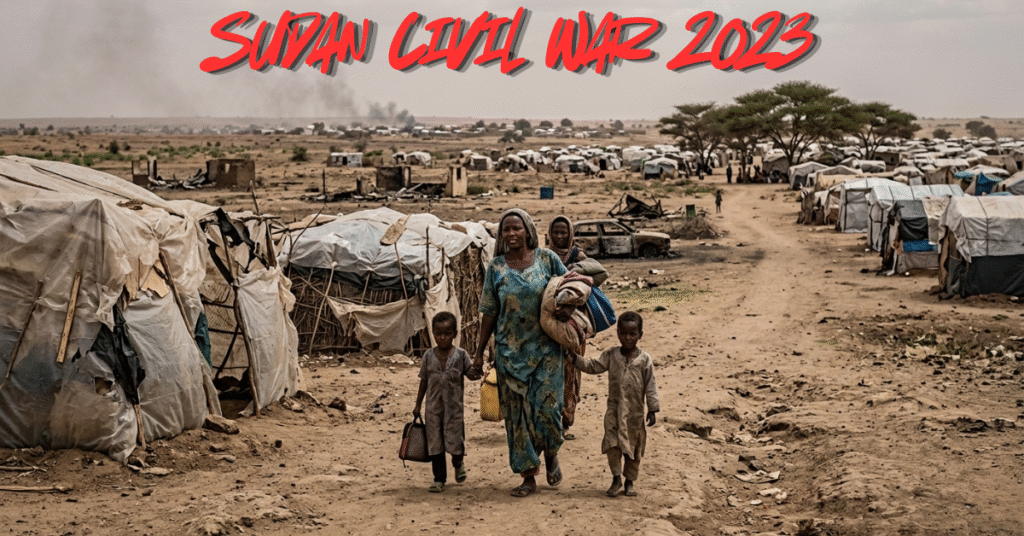
The Sudan Civil War (2023–present) is one of the most devastating and underreported conflicts in the modern world. What began as a power struggle between two military factions has now turned into a full-scale humanitarian catastrophe affecting millions of lives. Despite its scale, the crisis often remains overshadowed by other global conflicts.
This article explains everything you need to know—from its origins and causes to its current situation and global impact—in a clear, human-friendly way.
Background: How Sudan Reached This Point
To understand the current war, we must go back a few years.
Sudan has a long history of political instability. For nearly three decades, the country was ruled by President Omar al-Bashir, who came to power in 1989. His rule was marked by conflict, especially in regions like Darfur, and widespread human rights violations.
In 2019, after months of protests, Bashir was removed from power. This raised hopes for democracy. However, instead of a smooth transition, the country fell into a power struggle between military leaders and civilian groups.
A transitional government was formed, but tensions kept rising—especially between two powerful figures:
- General Abdel Fattah al-Burhan (leader of the Sudanese Armed Forces or SAF)
- General Mohamed Hamdan Dagalo, also known as “Hemedti” (leader of the Rapid Support Forces or RSF)
These two leaders had once worked together but eventually turned against each other over control of the country and the future political system.
How the War Started (April 2023)
The conflict officially began on April 15, 2023, when fighting broke out between the Sudanese Armed Forces (SAF) and the Rapid Support Forces (RSF).
The main reason was disagreement over:
- Integration of RSF into the national army
- Control over military and economic power
- Timeline for returning to civilian rule
What started as clashes in the capital, Khartoum, quickly spread across the country, turning into a nationwide war.
Who Are the Main Players?
1. Sudanese Armed Forces (SAF)
The official military of Sudan, led by General al-Burhan. It controls key institutions and has backing from some regional powers.
2. Rapid Support Forces (RSF)
A powerful paramilitary group led by Hemedti. Originally formed from militia groups involved in the Darfur conflict, the RSF has grown into a major military force.
3. Other Groups
- Local militias and tribal forces
- Foreign fighters and mercenaries
- Regional powers are indirectly supporting either side.
The involvement of multiple actors has made the conflict more complex and harder to resolve.
Timeline of Major Events
2023: Outbreak and Expansion
- Fighting begins in Khartoum and spreads rapidly.
- Airports, hospitals, and homes are targeted.
- Peace talks begin but fail repeatedly.
2024: Intensification
- Heavy destruction of infrastructure
- Economic collapse worsens
- Fighting spreads to regions like Kordofan and Darfur.
2025: Shifting Control
- RSF gains ground in western regions
- Sudanese army launches counter-offensives
- The capital city, Khartoum, is heavily damaged.
2026: Continued Violence
- The Sudanese government returns to Khartoum after regaining control.
- New frontlines emerge in Kordofan.
- Drone strikes and civilian casualties increase.
Despite years of fighting, no clear winner has emerged.
Humanitarian Crisis: The Real Cost of War
The Sudan war is now considered one of the worst humanitarian crises in the world.
Massive Displacement
- Around 13 million people have been forced to flee their homes.
- Many have crossed borders into neighbouring countries.
Hunger and Famine
- Food supply chains are disrupted.
- Famine conditions are spreading across multiple regions.
Civilian Suffering
- Hospitals and schools have been destroyed.
- Women and children face extreme risks, including violence and exploitation.
- Child soldiers are reportedly being recruited.
Death Toll
Exact numbers are unclear, but estimates suggest tens of thousands to hundreds of thousands have died.
Also Read:- Israel vs Iran Military Power Comparison: Who Is Stronger in 2026? – lostnews
War Crimes and Human Rights Violations
Both sides in the conflict have been accused of serious violations, including:
- Targeting civilians
- Sexual violence
- Destruction of healthcare facilities
- Use of child soldiers
Reports from international organisations indicate that these actions may amount to war crimes.
Role of Foreign Countries
The conflict is not entirely internal. Several countries have been accused of supporting different sides:
- Some Middle Eastern and African nations support the army.
- Others are linked to backing the RSF
This external involvement has prolonged the war and made peace negotiations more difficult.
Why Peace Efforts Are Failing
Many attempts have been made to stop the war, but none have succeeded.
Key Reasons:
- Lack of trust between the two leaders
- Competing interests of foreign powers
- Economic incentives to continue fighting
- Weak international pressure
Peace talks in places like Jeddah have repeatedly failed to produce lasting results.
Economic Impact
The war has destroyed Sudan’s economy.
- Infrastructure in major cities has been heavily damaged.
- Businesses have shut down.
- Inflation and unemployment have surged.
Experts say the economic damage may take decades to repair.
Regional and Global Impact
The conflict is not just a Sudan problem—it affects the entire region.
Refugee Crisis
Neighbouring countries like Chad, Egypt, and South Sudan are struggling to handle the influx of refugees.
Risk of Wider Conflict
The involvement of foreign powers raises concerns about regional instability.
Global Supply Chains
Sudan’s resources, including gold and agricultural products, play a role in global markets.
Current Situation (2026)
As of 2026, the war is still ongoing with no clear end in sight.
- Fighting continues in multiple regions.
- Millions remain displaced
- Humanitarian aid is insufficient.
- Peace talks remain stalled.
The situation is often described as an “abandoned crisis” because it receives less global attention compared to other conflicts.
Why This War Matters
Even if it doesn’t dominate headlines, the Sudan war matters for several reasons:
- Human suffering on a massive scale
- Threat to regional stability
- Example of a failed political transition
- Warning about the dangers of military power struggles
Conclusion
The Sudan Civil War (2023–present) is not just another conflict—it is a tragedy affecting millions of innocent lives. What began as a political disagreement has turned into a prolonged war with devastating consequences.
Despite global awareness, meaningful action remains limited. Until strong international pressure and genuine political will emerge, the people of Sudan will continue to bear the cost of a war they did not choose.
The world may not be watching closely—but the crisis is far from over.