
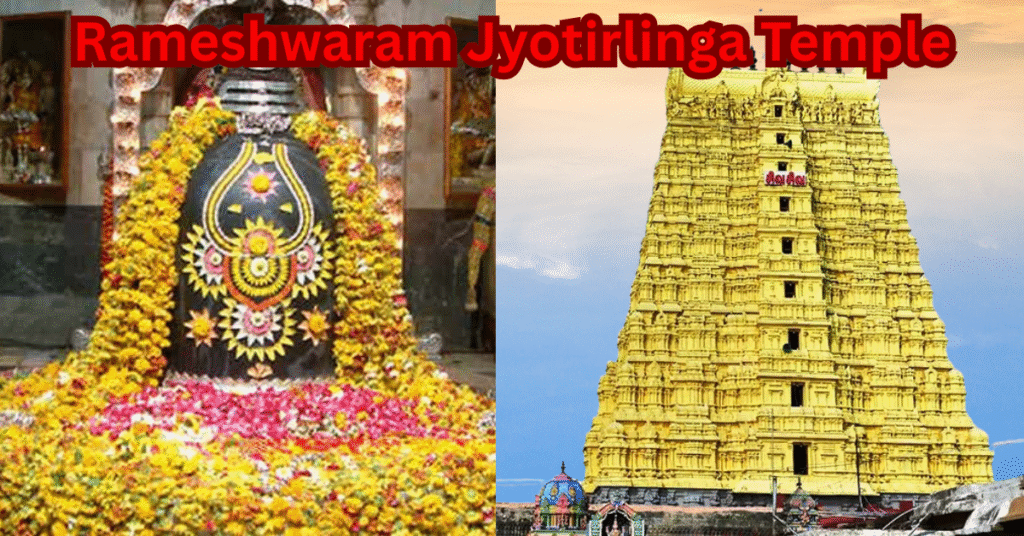
Rameshwaram Jyotirlinga is in the Ramanathaswamy Temple on Pamban Island, Tamil Nadu. It is one of the twelve Jyotirlingas and an important stop on the Char Dham yatra. The temple is famous for its Ramayana story, its long-pillared corridors, and 22 sacred wells where pilgrims take ritual baths before darshan. Set by the sea, the temple offers a rare blend of myth, architecture, and living devotion that has grown across centuries into a serene yet vibrant spiritual center.
Rameshwaram Jyotirlinga: Where It Is and Why It Matters
Rameshwaram is situated off Tamil Nadu’s coast, connected to the mainland by the historic Pamban Bridge. In Hindu tradition, it is both a Jyotirlinga of Shiva and a key Char Dham site, drawing Shaivites and Vaishnavites alike to the same sacred island. Pilgrims come for abhishek to the Jyotirlinga, the theertha snanam at 22 wells, and the experience of walking through seemingly endless carved corridors that frame the temple’s daily rhythm.
The Ramayana Story Behind the Rameshwaram Jyotirlinga

According to popular retellings, after defeating Ravana, Lord Rama sought to atone for the sin of killing a Brahmin and a great Shiva devotee. Guided by sages, Rama decided to worship Shiva in Rameshwaram. When Hanuman delayed in bringing a linga from Kailash before the auspicious time, Sita fashioned a sand linga—Ramalinga—which Rama installed and worshipped. When Hanuman arrived with a linga, Rama honored him by declaring that the linga Hanuman brought (Vishwalinga) would be worshipped first, a practice devotees still follow at the temple today.
Also Read: – Baidyanath Jyotirlinga, Deoghar: Ravana’s Devotion and India’s Living Pilgrimage – lostnews
How Rameshwaram Temple Was Built Over Centuries
The earliest shrine here was modest, but expansions over many dynasties turned it into one of India’s grandest temples. The Pandya rulers enlarged it from the 12th century onward; later, Sethupathi kings of Ramanathapuram added the famous third corridor in the 18th century, including the monumental pillared halls that define its look today. The outer corridors run a total length of about 3,850 feet with around 1,212 pillars, often cited as the longest temple corridors in the world, and the main rajagopuram rises about 53 meters.
The 22 Sacred Wells of Rameshwaram Jyotirlinga
Inside the corridors are 22 wells from which priests draw water in quick sequence during the ritual bath. Each well’s water tastes different and carries specific traditional benefits, ranging from prosperity to purification, with names such as Mahalakshmi, Savitri, Gayatri, Saraswati, Surya, Chandra, Ganga, Yamuna, and Gaya. Many pilgrims complete these baths before entering the sanctum, treating the experience as a cleansing of body and mind before meeting the Lord.
What to See in and Around Rameshwaram Jyotirlinga
- Sanctum and order of worship: Devotees pay respects to Vishwalinga first and then to Ramalinga, echoing the temple’s founding story and honoring both devotion and discipline side by side.
- Pillared corridors: The hypnotic sequence of carved columns, light, and shadow rewards slow walking and quiet contemplation at different times of day.
- Ram Setu and Dhanushkodi: The temple visit often pairs with viewing the Ram Setu shoals and the ruins of Dhanushkodi at the island’s tip, where legend says Rama broke the bridge after the war at Vibhishana’s request.
Daily Rituals and Devotee Experience at Rameshwaram Jyotirlinga
Rituals begin in the early morning; many devotees first bathe in the sea, then at the 22 wells, and finally offer abhishek with water, milk, or bilva leaves in the sanctum. Daily aartis and special pujas during Shravan and Mahashivratri draw large crowds. At the same time, ordinary weekdays can feel peaceful and deeply personal. The routine of water, corridor, and darshan creates a tactile, step-by-step journey from the outer world to an inner stillness.
Architecture and Craftsmanship of Ramanathaswamy Temple
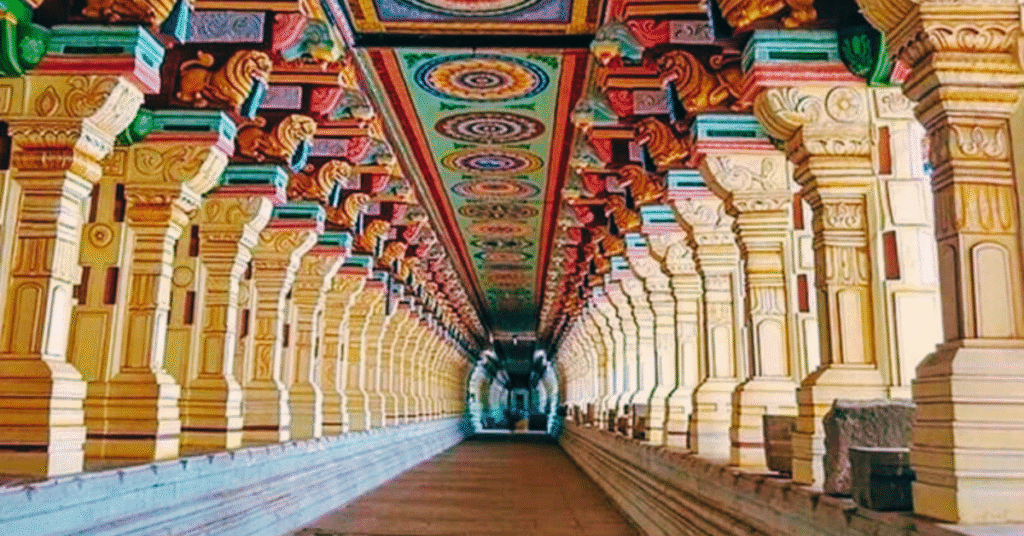
Ramanathaswamy is a jewel of Dravidian architecture. The sculpted pillars carry distinct compositions; the vast corridors create a sense of infinity; and the towering gopuram anchors the skyline of Rameshwaram town. The temple’s current form reflects layered patronage—from the Pandyas to the Nayaks to the Sethupathis—showing how communities across centuries invested in expanding this sacred space for future generations.
Also Read: – 12 Jyotirlingas of India Spiritual Gems of India
Practical Travel Tips for Visiting Rameshwaram Jyotirlinga
- The best season is from October to April, offering pleasant weather. Mahashivratri is a spiritually intense celebration, but it can also be crowded. Monsoon brings humidity and occasional travel disruptions.
- Sequence matters: If planning the 22-well ritual, start early and keep a change of clothes; rules require modest dress and temple-appropriate conduct.
- Getting there: Rameshwaram is connected by road and rail via the Pamban Bridge; Madurai and Trichy are common airport gateways with onward surface travel to the island.
Present-Day Significance of the Rameshwaram Jyotirlinga
Today, the temple is a busy and welcoming pilgrimage place for people from many traditions. The newly improved corridors and the organized 22‑well ritual help manage steady crowds while keeping the visit peaceful and respectful. Many visitors describe Rameshwaram as a rare place where the ocean’s horizon, the rhythm of water rituals, and the glow of lamps at aarti weave myth and everyday life into one continuous prayer.
Why Rameshwaram Jyotirlinga Stands Out Among the 12 Jyotirlingas
Rameshwaram unites Shiva devotion with Rama’s story, water with stone, and penance with grace. From Sita’s sand-made linga to the linga brought by Hanuman, from the long corridors to the 22 wells, the journey in Rameshwaram gently leads from doing to letting go. For many visitors, one visit feels like a full yatra—body refreshed, mind calm, and heart steady beside the sea.






1 thought on “Exploring Rameshwaram Jyotirlinga – The Temple Where Ramayana Lives On”