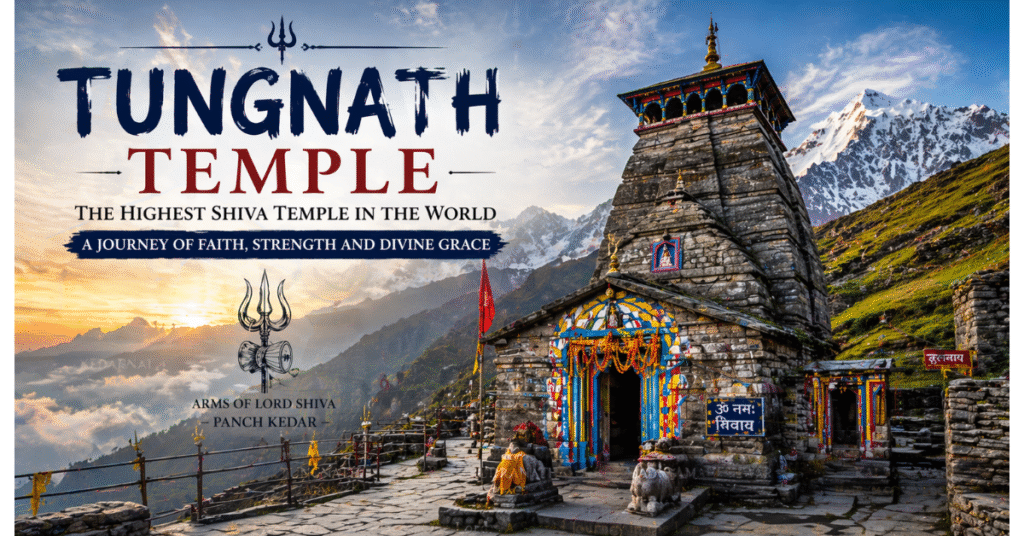
Nestled high in the Garhwal Himalayas of Uttarakhand, Tungnath Temple is one of the most sacred shrines dedicated to Lord Shiva. Known as the highest Shiva temple in the world, Tungnath is not just a place of worship—it is a powerful symbol of faith, mythology, and India’s timeless spiritual traditions.
This article explores the complete story of Tungnath Temple—from its mythological origins and the meaning behind its name to its cultural importance and present-day significance.
What Does the Name “Tungnath” Mean?
The name Tungnath comes from two Sanskrit words:
- “Tung” means lofty, high, or elevated.
- “Nath,” meaning Lord (a name for Lord Shiva)
So, Tungnath translates to “The Lord of the Peaks” or “The Highest Lord.”
This name perfectly reflects the temple’s location, as it sits at an altitude of about 3,680 meters (12,073 feet) above sea level, making it the highest Shiva temple on Earth.
Mythological History: Connection with the Pandavas
The origins of Tungnath Temple are deeply rooted in the epic Mahabharata, particularly the story of the Pandavas.
After the Kurukshetra War
Following the devastating Kurukshetra War, the Pandavas were filled with guilt for killing their own relatives and countless warriors. Seeking forgiveness, they set out to find Lord Shiva.
However, Shiva was displeased with the destruction caused by the war and chose to avoid them. He disguised himself as a bull (Nandi) and disappeared into the Himalayan region.
The Divine Story Behind Tungnath
The Pandavas eventually tracked Shiva to the Garhwal Himalayas. When Bhima tried to capture the bull, it began to vanish into the ground.
At that moment, different parts of Shiva’s body appeared at five different locations, forming the sacred Panch Kedar.
At Tungnath, the arms of Lord Shiva are believed to have appeared.
The Pandavas built a temple at this very spot to worship Shiva and seek redemption for their sins.
Historical Background
While mythology forms the foundation of Tungnath’s story, historians believe the temple structure dates back over a thousand years. It is said to have been built or revived by the legendary philosopher Adi Shankaracharya, who played a crucial role in reviving Hindu pilgrimage traditions across India.
The temple showcases classic North Indian Himalayan architecture:
- Built using large stone slabs
- Simple yet powerful design
- Designed to withstand extreme weather conditions
Despite harsh snowfall and freezing temperatures, the temple has stood strong for centuries.
Location and Natural Beauty
Tungnath Temple is located in the Rudraprayag district of Uttarakhand, near the famous hill station Chopta, often called the “Mini Switzerland of India.”
The temple lies below the summit of Chandrashila Peak, which offers breathtaking panoramic views of Himalayan peaks like Nanda Devi, Trishul, and Chaukhamba.
The journey to Tungnath involves a scenic 3.5 km trek from Chopta, making it one of the most accessible high-altitude pilgrimages.
Also Read:- Panch Kedar: History, Origin of the Name, and Its Journey Through Time – lostnews
Religious Significance
Tungnath is an important part of the Panch Kedar pilgrimage circuit, which includes five sacred temples of Lord Shiva.
Among them, Tungnath holds special significance because:
- It represents Lord Shiva’s arms.
- It symbolises strength, action, and divine power.
- It is considered a place where devotees seek inner strength and forgiveness.
Pilgrims believe that visiting Tungnath helps cleanse sins and brings spiritual clarity.
Rituals and Worship
The temple follows traditional Hindu rituals and is open to devotees during the summer months, usually from April/May to October/November.
Winter Tradition
During winter, heavy snowfall makes the temple inaccessible. The idol of Lord Shiva is then moved to the nearby village of Makkumath, where worship continues.
This seasonal movement reflects the deep connection between the temple and local traditions.
Tungnath in Modern Times
In recent years, Tungnath has gained popularity not only among pilgrims but also among trekkers and nature lovers.
A Blend of Spirituality and Adventure
The Tungnath trek is considered one of the easiest Himalayan treks, making it ideal for beginners. The path offers:
- Lush green meadows
- Dense forests
- Snow-covered trails (in early summer)
- Stunning mountain views
This unique blend of spirituality and natural beauty attracts visitors from across India and beyond.
Cultural Importance
Tungnath is more than just a temple—it is a living part of India’s spiritual heritage.
Local communities have preserved their traditions for generations. Festivals, rituals, and pilgrimages continue to keep their legacy alive.
The temple also reflects the deep-rooted belief that God resides in nature, especially in the mighty Himalayas.
Spiritual Meaning of Tungnath
The symbolism of Tungnath goes beyond its physical presence.
- Being the highest Shiva temple, it represents rising above worldly attachments.
- The “arms of Shiva” symbolise strength, responsibility, and action.
- The journey to the temple teaches patience, devotion, and endurance.
For many devotees, the trek itself becomes a form of meditation.
Also Read:- Kedarnath: A Path to Find Lord Shiva – lostnews
Conclusion
The story of Tungnath Temple is a beautiful blend of mythology, history, and spirituality. From the Pandavas’ quest for forgiveness after the Mahabharata war to its standing as the highest Shiva temple in the world, Tungnath continues to inspire devotion and awe.
The name “Tungnath” perfectly captures its essence—the Lord who resides at great heights, both physically and spiritually.
Even today, as pilgrims and trekkers walk the path to this sacred shrine, they are not just climbing a mountain—they are embarking on a journey toward inner peace, strength, and divine connection.